A Nurse in a Cell, Her Lawyer Chased at the Courthouse: The Ghana Jollof Case
A Nurse in a Cell, Her Lawyer Chased at the Courthouse: The Ghana Jollof Case
A senior nurse from Techiman, a mother of three, taken from her home near midnight by people her family could not trace for days, and refused bail over TikTok videos she did not make. Then, as her lawyer walks out of her bail hearing, a state agency tries to arrest him too. This is what happened in Ghana in September 2026, and why every Ghanaian should be worried.
Sunday night in Hansua
On Sunday, 13 September 2026, somewhere between eleven o'clock and midnight, three people dressed in black came to a family house in Hansua, a suburb of Techiman in the Bono East Region. Two men and a woman. They said they were National Security. They took Salomey Awiti Baffoe, 40 years old, a Senior Nursing Officer at the Abrafi Women and Children's Hospital in Techiman, and mother of three children.
Her brother, Antwi Francis, watched it happen. He says they told him they were taking his sister "to the regional command". On Monday and again on Tuesday, the family went looking for her. The Bono East Regional Police Command said it had no record of her. National Security said it knew nothing about her whereabouts.
Think about that for a moment. A woman is taken from her home at night by people claiming state authority, and for days the state itself tells her family it does not know where she is. There is a word for that in other countries, and it is not "arrest".
What she is accused of
She turned up next at the Adenta Circuit Court in Accra, some 400 kilometres from home, and was remanded into police custody for two weeks. Only then did the Police CID, working with the National Signals Bureau, explain what this was about.
According to the police, a TikTok account called "Ghana Jollof", run by a woman named as Barbara Asantewaa Kodua and believed to be living in the United Kingdom, posted videos attacking President John Dramani Mahama and the First Lady, including a claim of a near coup d'état at the Jubilee House. The police allege that Salomey Baffoe helped get these videos passed around, received money from the account holder and paid others to redistribute the content, and that "influential individuals" had sent her money.
She is not charged with making the videos. She is charged with abetting the publication of false news, under Sections 20(1) and 208 of the Criminal Offences Act, 1960, and the Electronic Transactions Act, 2008. She has pleaded not guilty. None of the police claims about money, recruitment or "influential individuals" has been tested in court. They are allegations, released to the public by the side that wants her kept in a cell.
Article 14(3) of Ghana's 1992 Constitution says a person arrested must be brought before a court within 48 hours. Salomey Baffoe was taken late on a Sunday night. She did not see a courtroom until the middle of the following week. No official has explained that gap.
A false news law that should have died in 2001
In 2001, Ghana did something many African countries still have not: Parliament repealed criminal libel and seditious libel. Journalists and citizens could no longer be jailed simply for what they said about those in power. It was a proud moment.
Section 208 of the Criminal Offences Act survived. It makes it a crime to publish a "false statement, rumour or report" likely to cause fear and alarm or to disturb the public peace. Governments of both big parties have used it, against journalists, radio hosts, activists and ordinary social media users. It is vague by design. Who decides what is "false"? The same state that is being criticised.
If a TikTok account says there was nearly a coup at the Jubilee House, and there was not, the answer in a democracy is simple: the Presidency says so, with facts, loudly, on every channel it controls. It does not need a nurse from Techiman sitting in a police cell in Accra while her children wait at home. And this woman is not even accused of saying it. She is accused of helping to spread it.
Sharing a political video is not a coup. Criticising a President is not a crime. A country that confuses the two has a problem that no TikTok account created.
Bail refused
On Thursday, 24 September 2026, the High Court in Accra refused her bail. The reason given was that releasing her "could interfere with cyber investigations being conducted by Police investigators."
Look at who is being kept locked up. A 40-year-old senior nurse in public service, with a fixed address, a job at a known hospital, three children and a family who went looking for her the moment she disappeared. Not a flight risk by any reasonable measure. Her phones and devices are in the hands of the investigators. What exactly is she going to interfere with from her home in Techiman, under whatever bail conditions a court cares to set?
Pre-trial detention is meant to be the exception. In this case it has become the punishment, handed out before any trial. The Greater Accra Regional Chairman of the Ghana Registered Nurses and Midwives Association, Jefferson Asare Danquah, spoke for many of her colleagues: "We're very disappointed." Her next court date is 30 September.
Then they came for her lawyer
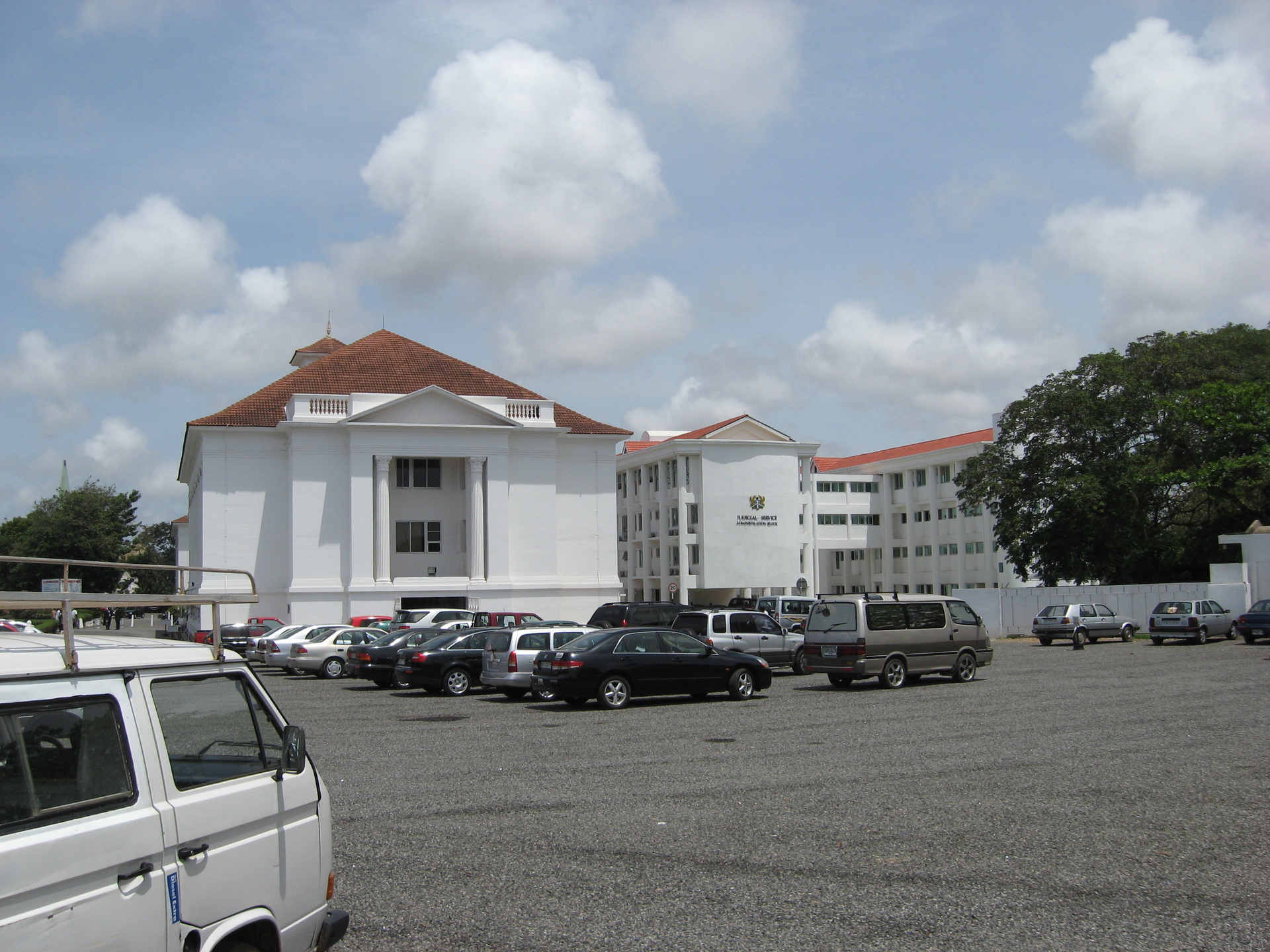
Her defence counsel is Nana Agyei Baffour Awuah, a lawyer and the sitting Member of Parliament for Manhyia South. On Wednesday, 23 September, he was at the Accra High Court arguing for her bail. The hearing was adjourned to the next day.
As he left, a woman approached him and said she was from the Economic and Organised Crime Office (EOCO). She wanted him to come with her, in her vehicle. He asked for identification. He asked for a warrant. By his account, he was shown neither. He offered to drive himself to EOCO's office. She refused. He got into his own car and left. In the scuffle, another lawyer, Enoch Anhwere Afoakwa, says an EOCO officer assaulted him.
EOCO confirmed it was their operation. Its statement said the arrest "was not successfully completed as officers assessed that a counter action would have endangered public safety". It also said "MP status does not place anyone beyond law."
Nobody has said it does. The question is not whether an MP can be investigated. Of course he can. The questions are why this, why here, why now, and why like this.
Seven months of silence, then the courthouse steps
EOCO's case against him, as far as the public has seen it, is a letter dated 10 February 2026. It was addressed to him as Senior Partner of his law firm, Sarkodie Baffour Awuah & Partners, and asked him to "assist" with an investigation into alleged financial irregularities at SIC Life Savings & Loans, a client of the firm. It was an invitation under Section 19 of the EOCO Act, not a charge. A second invitation followed on 27 February.
He replied in writing on 18 February that he was now an MP and had referred the matter to the Clerk to Parliament. His firm sent a representative to EOCO on three separate dates in March and April and submitted a written statement. Whether he should have gone in person is a fair question. But after April, as far as anyone has shown, EOCO did nothing. For five months.
Then, on the one day he is standing in the High Court defending a woman the government badly wants to keep in custody, EOCO suddenly needs him so urgently that it tries to take him off the court premises without a warrant anyone has seen.
Even Kwasi Kwarteng, a lawyer and NPP communications member speaking from the other side, called the timing and manner "poor, unintelligent, and unwise". The think tank IMANI Africa pointed to "a missing sentence" in EOCO's story: nobody has explained the legal step that turns a polite Section 19 invitation into a power to arrest, seven months later, at a courthouse.
Every lawyer in Ghana saw that video. The lesson is not hard to read: take on the wrong client, and you may find the state waiting for you when you walk out of court. The Ghana Bar Association put it plainly. Such actions create a "perception of intimidation" and "may have a chilling effect on the legal profession as a whole." An accused person with no lawyer willing to stand beside her has no fair trial.
Not a party question
It would be easy to turn this into NPP against NDC. Baffour Awuah is NPP. The complaints come loudest from NPP figures: Hawa Koomson, Dr Bawumia, the Minority Caucus, the Ashanti regional executive. That is exactly why it matters who else has spoken.
Rockson-Nelson Dafeamekpor, the NDC MP for South Dayi, said EOCO must go through the Speaker before seeking to arrest a Member of Parliament: "Where a law provides a procedure for a right to be exercised, it's only that procedure that must be followed." Former Majority Leader Osei Kyei-Mensah-Bonsu said EOCO must understand the constitutional protections for MPs. The Ghana Bar Association is not a political party.
And let nobody pretend this began in 2025. Ghana's press freedom record already slipped badly under the previous government, with journalists arrested, harassed and worse. Section 208 was there then, too. Every government that finds the false news law useful today should remember that one day it will be in opposition, and the law will still be there.
What should happen now
- Bail for Salomey Baffoe. Set whatever conditions the court wants: reporting, surrendered passport, sureties. Let her go home to her children while the case runs.
- A full account of Sunday night. Who took her from Hansua? Under what authority? Why did the police and National Security both deny knowing where she was? Why was she not in court within 48 hours?
- EOCO to publish its legal basis. Was there a warrant on 23 September? Which section of which law turned an invitation into an arrest? Was the Speaker informed? Who ordered the operation, and why that day?
- An independent look at the assault claim by lawyer Enoch Anhwere Afoakwa, using the full video, not social media clips.
- Parliament to review Section 208. Ghana abolished criminal libel in 2001. Finish the job.
The bottom line
Salomey Baffoe may be innocent. She may, as the police claim, have been paid to push someone else's videos. That is for a court to decide, in a fair trial, with a lawyer who is not afraid to stand next to her. What should not be up for debate in Ghana, 69 years after independence, is this: citizens are not taken from their homes at night by people who will not say who they are; a mother of three is not held for weeks over social media posts; and a lawyer is not chased across the courthouse car park for doing his job.
Ghana used to be the country other Africans pointed to when they talked about free speech. It still can be. But not like this.
Sources
- GBC – Police arrest nurse over alleged false news, inciteful content circulation
- YEN – Mother of 3 reportedly arrested over links to Ghana Jollof TikTok account
- ModernGhana – The midnight arrest, "Ghana Jollof" and the questions Ghana must now ask
- Asaase Radio – "Let our sister go home to her children"
- 3News – High Court refuses bail for Salomey Awiti Baffoe
- 3News – GRNMA: "We are disappointed"
- MyJoyOnline – GBA condemns attempted arrest of Manhyia South MP
- MyJoyOnline – EOCO: MP declined two invitations
- GhanaWeb – Resurfaced EOCO letter
- GhanaWeb – "I never ignored EOCO" – Baffour Awuah
- ModernGhana – "I had to run to safety"
- MyJoyOnline – Dafeamekpor: EOCO must go through Speaker
- MyJoyOnline – Kyei-Mensah-Bonsu on constitutional protections for MPs
- 3News – Kwarteng: "poor, unintelligent, and unwise"
- IMANI Africa – What the chronology establishes and what the law still requires