Agbogbloshie: They Cleared It Once for a Hospital That Never Came
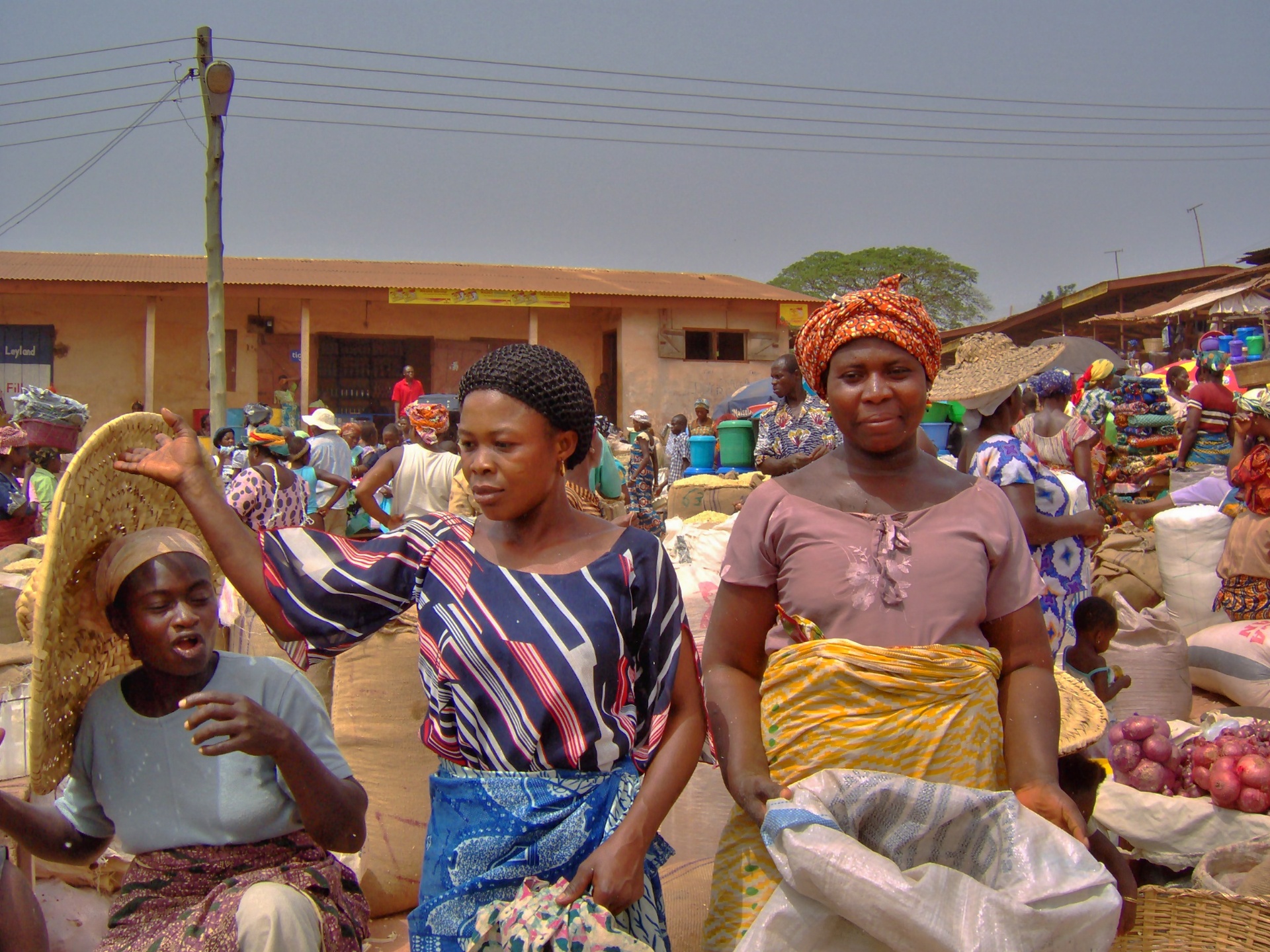
Header: File Photo, Ghana market. Below, investigative reports by (c) GhanaWeb-News 29nd Aug & 19 Oct 2026
The bulldozers stopped at Agbogbloshie. The questions did not.
When we published this investigation on 29 August, the deadline for traders to leave had just expired. Seven weeks later, the redevelopment of Agbogbloshie for a 24-Hour Economy Market is on hold. Not because any of the questions below was answered, but because the traders refused to move.
What has happened since
- Tuesday 15 September: traders of the Kokomba Yam Market met Minority Members of Parliament and publicly rejected the plan to demolish their market. Their market secretary, Anthony Tayam, said the leadership had never been consulted and warned that a demolition without an alternative site would disrupt the supply of yam to Accra.
- Wednesday 23 September: after meeting the yam market leadership together with Transport Minister Joseph Bukari Nikpe and the Mayor of Accra, Michael Kpakpo Allotey, Mahama Ayariga announced that the redevelopment was suspended for further consultations with traders, market leaders and other stakeholders. The project remains on hold while those consultations continue.
- The new official line: the 24-Hour Economy Market initiative, the government now says, is meant to improve market infrastructure, not to build new facilities without regard to the trade already there. That is very close to what the yam traders asked for in August: levelling and drainage, not replacement.
Still not confirmed: whether any clearance took place at the Agbogbloshie Cargo Station and the Nzema Market after the 28 August deadline. The suspension announced in September refers to the yam market. We have found no official statement on the other two sections, and this update states no outcome.
The four questions, seven weeks on
A suspension is not an answer. None of the four questions we put in August has been answered in public: where the relocation site is and whether it is ready; whether compensation has been assessed or paid; who exactly was consulted; and what happens to traders who cannot move. Nor has anyone explained what happened to the eighty acres cleared in 2021 for a hospital that was never built.
The same pattern, elsewhere
- Nungua (Greater Accra), September: the Nungua Market Shop Owners Association unanimously rejected the demolition of their shops for a new 24-hour market, pointing out that the shops were privately built and funded, not public property. The Municipal Chief Executive says a structural report found the 20-year-old market uninhabitable, that funding from the District Assemblies Common Fund is secured, and has pledged in writing that existing shop owners will get priority in the new market.
- Suhum (Eastern Region), October: more than 1,000 traders at the Amponsah Market have reportedly been given an ultimatum to leave, with no alternative site. Their MP, Frank Asiedu Bekoe, has asked the Municipal Assembly to finish the new 24-Hour Economy Market and move the traders into it before any demolition, and says the old market is to be taken over by a private developer. The traders have petitioned the MP and the Suhum Traditional Council.
- Enchi (Western North), August: the market was demolished. Two months later, the traders are still waiting for the Assembly to provide a concrete alternative.
The lesson of Agbogbloshie so far is a simple one: where traders organise, speak publicly and bring in their MPs, the excavators wait. Where they do not, the record this year has been demolition first and answers later, if at all.
Sources for this update: Citi Newsroom (15 and 24 September 2026), Nkonkonsa (24 September 2026), Daily Guide (4 September 2026), Hot Digital Online and Asaase Radio (October 2026), Adom Online (August 2026). The original investigation of 29 August 2026 follows below, unchanged. No allegation of unlawful conduct is made against any Assembly, official or named individual. Background: Bulldozers with opposite orders: Ghana's two demolition programmes
Investigation · Accra · The second demolition
Agbogbloshie: They Cleared It Once for a Hospital That Never Came
In July 2021 bulldozers and soldiers cleared eighty acres of Agbogbloshie to build a hospital. Five years on, the hospital does not exist, the land has gone back to refuse and open defecation, and the traders sent away came back because they could not sell where they were put. Now 946 structures have been marked for a different project, and the deadline to leave has passed.
Everything about the current Agbogbloshie clearance has been reported as though it were a new event. It is not. It is the second time in five years that this ground has been cleared, and the first time has already told us how the second will go.
So let us start there.
1 July 2021
Scrap workers at Agbogbloshie were woken early on a Thursday morning by panicked calls from colleagues.
They knew the government intended to clear the onion market next door. That demolition had been negotiated over a long period, and the onion traders had agreed a relocation site outside Accra at Adjen Kotoku.
The scrapyard was a different matter. It hosted an estimated 8,000 workers, and no negotiations had taken place about it at all. It was not supposed to be affected.
That morning, police and demolition crews entered the twenty-acre scrapyard with bulldozers. The whole area was cleared and the workers were forcibly displaced.
Eight thousand people lost their place of work in a clearance nobody had negotiated with them, on a morning they learned about from a telephone call.
The exercise was carried out under the decongestion programme “Let’s Make Accra Work,” led by the then Greater Accra Regional Minister, with bulldozers and military personnel mobilised.
Aerial photographs taken twenty days before and nine months afterwards show the same ground: first a dense working scrapyard, then eighty reclaimed acres with almost nothing standing except a technical training facility and a set of recycling containers.
What the eighty acres was for
A hospital.
The land was cleared to make way for a modern health facility under Agenda 111, the national district hospital programme.
By August 2024 — three years after the demolition — JoyNews went back to look.
Eight thousand scrap workers and an entire onion market were removed to build a hospital that has not been built, on land that is now used for dumping.
That is not a difference of opinion about urban policy. It is a completed experiment with a published result.
August 2026: the same ground, a different reason
The AMA formally serves notice on traders and commercial operators at the Agbogbloshie Cargo Station, the Nzema Market and portions of the Yam Market, to vacate for construction of a 24-Hour Economy Market. Structures on the affected land are marked for demolition.
The Assembly begins a public education and sensitisation campaign to inform traders, community leaders and the public about the redevelopment, its benefits and the clearance process.
Traders publicly demand dialogue. They say official communication has been lacking and that they have relied on media coverage for news about their own livelihoods, and that no direct meetings have been held to clarify transition logistics, site facilities or relocation procedures.
Yam traders hold a press conference rejecting the plan outright. Their spokesperson states that 946 structures have been marked for demolition, and reports that the uncertainty has damaged traders’ health, with some suffering serious complications.
Chiefs and traditional authorities meet the AMA and demand stronger assurances that traders and residents will not be left behind. Concerns over relocation and livelihoods dominate the meeting.
The deadline expires. The Assembly has said it will then begin removing structures on the affected land.
The promise the traders say was made
This is the sharpest thing in the current dispute and it has had almost no attention.
At their press conference, the Agbogbloshie yam traders said that President John Dramani Mahama had promised them that their market would be levelled with gravel and provided with proper drainage gutters — improving the conditions they trade in.
Not replaced. Improved.
What they are now facing is demolition and a new market structure.
If that account is accurate, the gap between what was promised and what is being delivered is not a detail. Gravel and drainage would have cost a fraction of a new market and would have left every trader exactly where they are, with a better surface underfoot and somewhere for the water to go.
It is also, notably, what the traders themselves asked for.
The Assembly’s case
It should be put properly, because it is not unreasonable.
Agbogbloshie genuinely needs work. It is the largest food hub in the metropolis, and the AMA’s own waste management operations have documented chronically choked drains, trucks parked on road shoulders cracking the surface, and goods displayed on the ground in unhygienic conditions. Anyone who has walked it knows this is accurate.
It sits on the Korle drain — the most flood-critical channel in Accra. Clearing and desilting there is not cosmetic; it is the difference between Kaneshie and Alajo flooding and not flooding.
The Assembly says consultations took place with traditional authorities, market leaders, traders and other stakeholders, and that all affected traders will be relocated to a parcel of land prepared solely for them.
And the redevelopment is described as bringing improved sanitation, safer trading conditions and better facilities — which, if delivered, traders would benefit from more than anyone.
Every one of those points is defensible. The difficulty is that all of them were also true in 2021.
The four questions, and why they have not been answered
When we wrote about Ghana’s two demolition programmes earlier this month we put four questions about Agbogbloshie. The deadline has passed and none has a published answer.
Where exactly is the relocation site, and is it ready?
The AMA says land has been prepared solely for affected traders. It has not been publicly identified in a way traders can visit and assess. Adjen Kotoku was also prepared. It was too far from customers to trade in, and people came back.
Has any compensation been assessed or paid?
Separately, at the same location, the Assembly has said it is awaiting compensation funds from the World Bank before proceeding with demolitions connected to Korle drain desilting. Whether the market clearance carries equivalent provision has not been stated.
Who was consulted, and can they be named?
The Assembly cites consultations with traditional authorities and market leaders. Traders say they were not reached. Chiefs are separately demanding a protection plan, which suggests they do not consider the matter settled either. Publishing the attendance record of those meetings would resolve it in an afternoon.
What happens to traders who cannot move?
No published answer. On the record of Kasoa, Enchi, Aboabo and Wa this year, the answer has generally been the excavator.
Nine hundred and forty-six
That is the traders’ figure for structures marked for demolition. If it is accurate, it is worth pausing on.
Each of those structures is somebody’s working capital. Most were built by the trader occupying them, frequently on credit. In Kasoa in May, traders whose shops were demolished for the same national programme said they had built with personal loans and faced losing them with no compensation and no alternative site.
A market stall is not a building. It is a bank account with a roof on it.
And the traders are reporting that the stress of not knowing has made people ill. That is easy to dismiss as rhetoric until you consider what it is to be sixty years old, to have your entire savings standing in a structure with a number painted on it, and to learn what happens next from a radio bulletin.
What makes this different from the rest
Agbogbloshie is the one place in Ghana where the country’s two demolition programmes overlap on the same ground.
It sits on the Korle drain, where World Bank-funded desilting is under way and where the Assembly has said demolition awaits compensation disbursement. And it is the site of a 24-Hour Economy Market, for which notice has been served and the deadline has expired.
Two clearances, one location, opposite standards.
Where a multilateral lender’s safeguard rules apply, compensation comes first and the bulldozers wait. Where the project is domestically funded, the record across Ghana this year has been structures first, compensation afterwards or not at all.
Ghanaian traders are receiving the protection of World Bank procurement policy rather than the protection of their own state — and only on the portion of the same site where those rules happen to apply.
What would settle it
Publish the relocation site, with a date
An address, a boundary, water, sanitation and access, that traders can go and look at before they lose the place they trade now. Adjen Kotoku failed not because it did not exist but because nobody could sell there.
Publish the consultation record
Who attended, representing whom, on what dates. The Assembly says the consultations happened. The traders say they did not. One document settles it.
Answer the gravel question
The yam traders say the President promised levelling and drainage rather than replacement. Either that promise was made or it was not. It is answerable in a sentence, and nobody has been asked to.
Say what happened to the eighty acres
Before this clearance proceeds, the state should account for the last one. Eight thousand scrap workers and an onion market were removed in 2021 for a hospital. Where is it? What was spent? Why did the land revert to dumping? Nobody has been required to explain, and until somebody is, no assurance about this clearance carries weight.
Agbogbloshie has now been cleared once for a hospital that was not built, on land that went back to refuse, displacing thousands of people, some of whom returned because they could not survive where they were sent.
It is being cleared again, for a market, by an Assembly that says it has consulted people who say they were not consulted, on a deadline that has now expired, with 946 structures marked and a relocation site nobody has been shown.
The traders are not opposing development. In Kasoa they said explicitly that they were not against the government’s initiative. What they object to — here as everywhere else this year — is being cleared before anyone has worked out where they are going.
The bulldozers are the easy part. Ghana has demonstrated repeatedly that it can knock things down on schedule. What it has not yet demonstrated at Agbogbloshie is that it can build the thing it knocked them down for.
Connected reading
Facts verified: 29 August 2026.
The current clearance — formal notice served Tuesday 4 August 2026, deadline 28 August 2026, covering the Agbogbloshie Cargo Station, Nzema Market and portions of the Yam Market for a 24-Hour Economy Market — is as reported by The Ghana Report, 3News, Rainbow Radio and the Accra Metropolitan Assembly’s own statements. The figure of 946 structures marked for demolition, the account of a presidential promise of levelling and drainage rather than replacement, and reports of health effects on traders are as stated by the traders’ spokesperson at a press conference reported by Adom. Traditional authorities’ demands for a protection plan and the AMA Presiding Member’s remarks on project scope are as reported by Adom. The 1 July 2021 demolition of the Agbogbloshie onion market and scrapyard, the estimated 8,000 scrapyard workers, the absence of prior negotiation over the scrapyard, and the relocation of onion traders to Adjen Kotoku are as documented by African Arguments. The stalled Agenda 111 health facility, the condition of the reclaimed 80 acres and the accounts of returning traders are from JoyNews reporting of August 2024. Drainage and sanitation conditions at the market are from the AMA’s own published waste management reports. At the time of writing we have no confirmed report of whether clearance began after the deadline expired on 28 August 2026, and this page states no outcome. No allegation of unlawful conduct is made against the Accra Metropolitan Assembly, any government official or any named individual.