Forty-Four Ghanaians Died in The Gambia in 2005. One Man Came Home. Ghana Did Nothing
Forty-Four Ghanaians Died in The Gambia in 2005. One Man Came Home. Ghana Did Nothing.
They were going to Europe by boat. A president decided they were mercenaries. A death squad killed them and threw the bodies down wells across the border. Ghana closed the case at a summit in Libya in July 2009, on the basis of a report that has never been published — and twenty-one years later nobody has been tried for it.
This is not a story about The Gambia. The Gambia has investigated it, televised the testimony, and named the men who did it.
This is a story about Ghana — about what a government does when forty-four of its citizens are murdered abroad and admitting it would be inconvenient.
July 2005
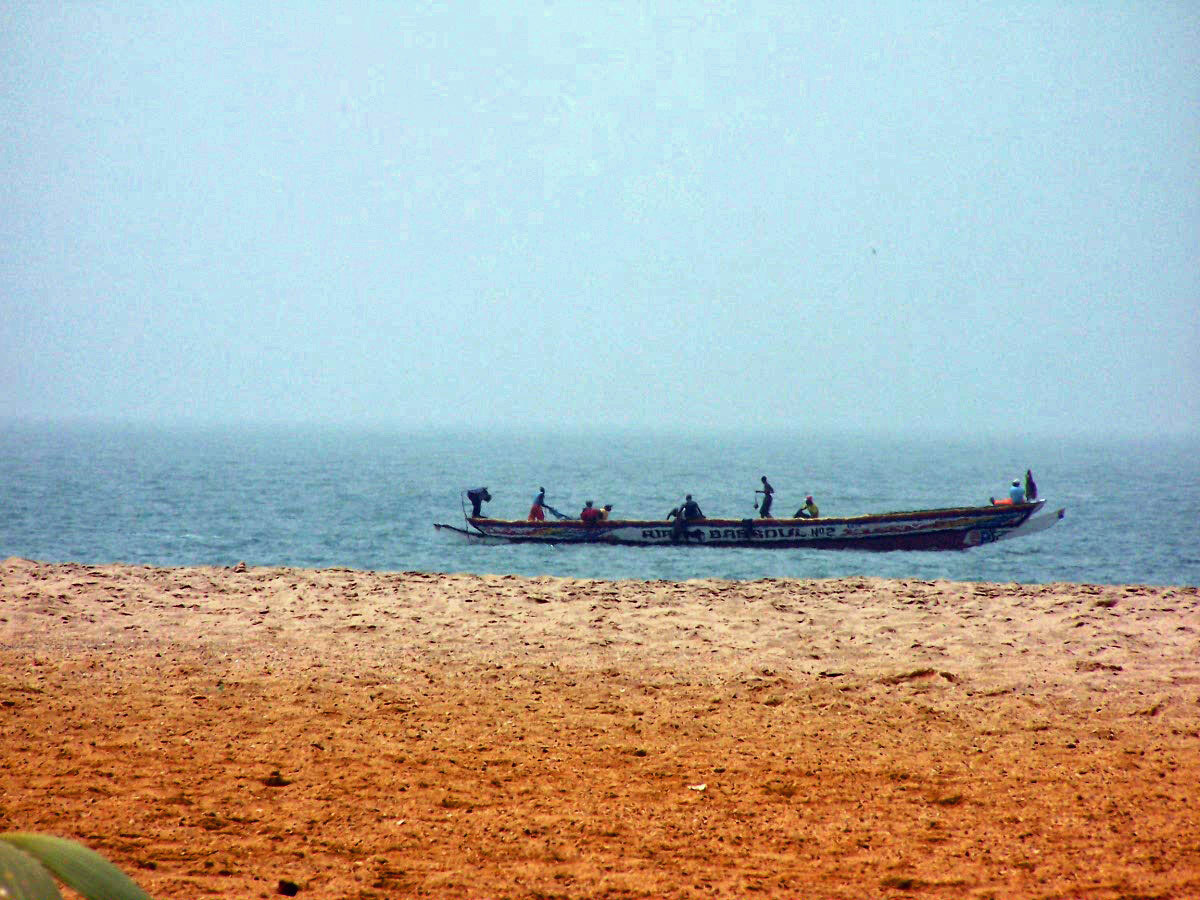
They came ashore in The Gambia in the middle of July 2005 — Ghanaians, Nigerians, Senegalese, Ivorians, Togolese and others. More than fifty people in total; the figures given in the investigative record run from roughly fifty to fifty-nine. At least forty-four of them were Ghanaian.
They were doing what thousands of young West Africans were doing that year and are still doing now: moving north along the coast, looking for a boat to the Canary Islands and then Europe. They had paid for passage. They were carrying what they owned.
What they did not know was that Gambian intelligence had been warned that mercenaries were coming by sea to overthrow President Yahya Jammeh.
A group of foreign men arriving unannounced on a beach, at that moment, in a country run by a man who had taken power in a coup and expected everyone else to try the same — that was all it took.
They were arrested on 22 July 2005 at Barra. According to the accounts later given by Gambian officers themselves, they were taken across the river to the Naval Headquarters in Banjul by naval boat, in two crossings because there were too many for one. Men who had been on the second crossing said the men from the first arrived beaten and stripped of their possessions.
While this was happening, the president and his ministers, the heads of the security services and assorted dignitaries were at a public festival in Banjul marking the anniversary of the coup that brought him to power.
The detainees were then handed to a unit called the Junglers — a squad outside the ordinary chain of command that took its orders directly from the president.
Almost all of them were killed. On 23 July 2005, villagers at Brufut, in a forest near a settlement called Ghana Town some forty-five minutes from Banjul, found eight bodies. The rest were taken across the border into Casamance, in Senegal, and dropped into dry wells.
The one who ran
Martin Kyere was one of the Ghanaians. He was in a vehicle being driven away from the capital with other prisoners, bound, and he worked out what was coming.
He got his hands free, got out of the moving vehicle, and ran into the bush. He hid in a tree. He heard what happened to the others.
He is the only known Ghanaian survivor.
What Martin Kyere did next is the part of this story that should be taught in Ghanaian schools.
He came home, and then — with no budget, no office, no official standing and no government behind him — he began looking for the families of the men who had not come home. One town at a time. For years.
He found them. He told mothers in Kumasi and Accra and Takoradi what had happened to their sons, because nobody from the Ghanaian state was going to. He organised them. He gave evidence to human rights investigators, and later travelled to The Gambia to testify to its truth commission.
Every piece of pressure that has ever been applied in this case traces back, eventually, to one man who jumped out of a moving vehicle in 2005 and refused to let it go.
What Ghana did
Here is where this becomes a Ghanaian story rather than a Gambian one.
Ghana tried twice, in 2005 and 2006, to investigate. The Jammeh government blocked it. In August 2005 a Ghanaian delegation led by the then foreign minister — Nana Addo Dankwa Akufo-Addo, later president — went to Banjul and was told by his Gambian counterpart that the eight bodies found at Brufut might be victims of ritual murder. Jammeh denied everything, and later accused Akufo-Addo of using the deaths for his own election campaign.
So in 2008 the United Nations and ECOWAS formed a joint investigative team. Its report, delivered in April 2009, concluded that the Gambian government was neither directly nor indirectly complicit, and blamed rogue elements of the security services acting on their own.
That report has never been published. Not to the families, not to the public, not in response to repeated requests — including requests from five United Nations human rights experts. Twenty-one years after the killings and seventeen years after it was written, nobody outside government has read it.
Where the deal was signed
On 2 July 2009, in Sirte, Libya, the governments of Ghana and The Gambia signed a Joint Communiqué ending the dispute.
They signed it at the African Union summit, which was meeting in Sirte from 1 to 3 July 2009. President John Evans Atta Mills had been in office for under six months.
The United Nations Secretary-General issued a statement the same day applauding both countries for settling their differences peacefully and by negotiation.
The deaths of forty-four Ghanaians were resolved as a diplomatic irritant, at a continental summit, in a third country, on the margins of somebody else's agenda.
The terms: the Gambian government was recorded as not complicit; it would make contributions to the families as a humanitarian gesture, not as compensation; and both countries pledged to pursue by all available means the arrest and prosecution of everyone involved in the deaths and disappearances.
No arrest was ever made under that pledge, by either government.
The Gambia paid US$500,000. Ghana distributed 10,000 cedis to each of roughly twenty-seven families — about US$6,800 at 2009 rates. Six bodies were returned to Ghana; investigators have never been able to establish whether they were the bodies of the murdered men.
Ghana's foreign minister at the time, Alhaji Muhammad Mumuni, was on the record as sceptical of the report's findings. He accepted it anyway, to close the matter for the families and repair relations with Banjul.
Jammeh said the findings vindicated him.
Seventeen months later, in Libya again
On 29 and 30 November 2010, President Atta Mills attended the Third Africa–EU Summit in Tripoli. Migration was on the agenda; the summit adopted the second action plan of the Africa–EU partnership on migration, mobility and employment.
Speaking there, the President addressed Ghanaians who travel. He said they should not be told not to travel, but should make sure they had the right papers — and that the government made sure it protected its citizens.
The forty-four did not die because of paperwork. They died because a foreign president decided they were mercenaries, and because a death squad was told to deal with them.
Seventeen months earlier, at a different summit in the same country, his government had signed the document that closed their case.
We hold that footage. It is published in full here, and it is examined in a separate article on this site.
It was not true, and it did not take twenty-one years to find that out
In 2018, Human Rights Watch and TRIAL International published an investigation based on interviews with thirty former Gambian officials, eleven of whom had been directly involved in the operation.
Their account: the migrants were detained by the state, moved by the navy, held at official facilities, and handed to a unit answering to the president. Not rogue elements. The chain of command.
The report was launched in Accra, because that is where most of the families are.
Then, between 2019 and 2021, The Gambia's own Truth, Reconciliation and Reparations Commission heard sworn testimony from nearly 400 witnesses, including former Junglers describing their own work in plain language on live television. It concluded that the killings were carried out on the orders of Yahya Jammeh — and that there had been an organised attempt to cover them up.
The 2009 finding that Ghana signed up to has been contradicted by the men who carried out the killings, under oath, in public.
Ghana has never formally revisited its position. There has been no Ghanaian commission of inquiry. No Ghanaian prosecution, and no request for one. No systematic effort to identify the dead or recover remains from the wells in Casamance. No state compensation beyond the 2009 distribution. No annual commemoration. Most Ghanaians under forty have never heard of this at all.
In May 2018 the government announced that it had tasked the Ministry of Foreign Affairs and the Attorney-General's Department to study the matter and advise on the way forward. In December 2019 the President responded to growing impatience from families and members of parliament. Neither produced anything.
Meanwhile, three men went to prison — in Europe and America
While Ghana did nothing and The Gambia could not, other countries used laws their own parliaments had mostly forgotten they had passed.
- Germany, November 2023 — Bai Lowe, a former Jungler, sentenced to life imprisonment for crimes against humanity.
- Switzerland, May 2024 — Ousman Sonko, Gambian interior minister from 2006 to 2016 and before that inspector general of police, convicted of crimes against humanity and sentenced to twenty years. He is the most senior official ever tried in Europe under universal jurisdiction. His appeal was heard in spring 2026.
- United States, April 2025 — Michael Sang Correa, a Jungler who had overstayed a diplomatic visa, convicted by a Denver jury of torture and conspiracy to commit torture. In August 2025 he was sentenced to 810 months: sixty-seven and a half years. It was the first time a US jury had convicted a non-citizen of torture committed abroad.
None of those three convictions was for the killing of the migrants. They were for other crimes of the same regime, by the same unit, in the same years. The 2005 killings themselves have never been the subject of a criminal trial anywhere in the world.
Gambian victims flew to Denver to watch a jury do what their own courts could not. Ghanaian families did not go, because nobody sent them.
The court that exists on paper
On 15 December 2024, ECOWAS formally established the Special Tribunal for The Gambia — a hybrid court to try the crimes of the Jammeh era. It is the first tribunal ever created by a regional organisation to prosecute mass atrocity crimes inside one of its own member states.
Its seat is in The Gambia. Three judges per panel, one of them Gambian. Trials to be filmed and broadcast.
And the strongest argument for why it can succeed is precisely the one that concerns Ghana: the dead of July 2005 were Ghanaians, Nigerians and Senegalese. This is not a Gambian domestic matter. It is a regional crime, which is why a regional court makes sense, and why refusing to hand over a suspect to a court representing all of West Africa is harder than refusing a single national court.
That argument only works if the countries that lost citizens actually make it.
As of 2026, the tribunal has no money. It is expected to cost tens of millions of dollars. The collapse of American foreign assistance in 2025 removed one obvious source. The post of Special Prosecutor sat vacant for nearly two years before the appointment of the British lawyer Martin Hackett was finally announced.
No hearing date has been set. Nobody has been charged. Yahya Jammeh is in Equatorial Guinea, which has no extradition treaty with The Gambia, and whose president has said he would protect him.
2026: the first movement in years
On 17 May 2026, Ghana's Foreign Minister Samuel Okudzeto Ablakwa held bilateral talks in which he raised accountability for the 2005 killings with his Gambian counterpart, Sering Modou Njie.
It matters who is asking. In September 2021, as an opposition member of parliament, Ablakwa publicly demanded that the then president tell Adama Barrow that Ghana would not accept manoeuvres in Banjul aimed at shielding Yahya Jammeh. He is now the man holding the file.
There is also a Gambian commitment already on the table. On 25 May 2022, following the truth commission's findings, the Gambian government accepted a recommendation to pay around US$600,000 in compensation to victims and their families, routed through the governments of their own countries.
Talks are not a prosecution and a recommendation is not a payment. But for the first time since Sirte, the question is being asked by a Ghanaian minister with a public record of asking it. What happens next is a test of whether that record survives office.
What Ghana could actually do
This is not a case where the obstacles are mysterious. They are specific, and several of them sit directly within Accra's reach.
- Publish the 2009 report, or demand its publication. Ghana is a party to it. Everything that followed rests on a document nobody is allowed to read.
- Formally withdraw from the 2009 conclusion. Ghana subscribed to a finding that the evidence has since destroyed. Saying so costs nothing and changes the legal landscape for the families.
- Put money into the Special Tribunal. Ghana is an ECOWAS member state with more citizens among the dead than any other country. Contributing to the court's budget would be the single most effective thing any government has done on this file in twenty-one years.
- Use the ECOWAS Authority. Ghana's presidents have chaired it. The tribunal was created by it. Funding and the surrender of a suspect are both political questions before they are legal ones.
- Identify the dead. The families have names, photographs and dates. Senegal has wells. Forensic recovery is possible and has never been attempted.
- Pay the families properly, from the Ghanaian state, without waiting for anyone else to accept liability first.
And one more thing, since we are not sugar-coating
In 2025 Ghana joined the list of African states accepting third-country deportees from the United States — people who are not Ghanaian, have no connection to Ghana, and were put on an aircraft because Washington could not lawfully return them home. Several African governments took such arrangements; several were paid.
It is worth holding those two facts next to each other.
Ghana will receive foreign nationals it did not ask for, from a government that wanted them gone, and find somewhere to put them.
Ghana has not, in twenty-one years, funded a court, demanded an extradition, or recovered a single body belonging to forty-four of its own citizens who were killed on a beach road because a foreign president was frightened.
The record, in order
- 22 July 2005 — More than fifty West African migrants, at least forty-four of them Ghanaian, are arrested after their boat lands in The Gambia.
- 23 July 2005 — Eight bodies are found at Brufut, near Ghana Town. The rest are disposed of in Casamance, Senegal.
- July 2005 — Martin Kyere escapes from a moving vehicle and survives.
- August 2005 — A Ghanaian delegation led by Foreign Minister Nana Akufo-Addo goes to Banjul; the Gambian side suggests ritual murder.
- 2005–2006 — Ghanaian investigations are blocked by the Jammeh government.
- 2005–2018 — Kyere traces the families of the dead across Ghana, without official support.
- April 2009 — A joint UN–ECOWAS report finds the Gambian government neither directly nor indirectly complicit. It is never published.
- 2 July 2009 — Ghana and The Gambia sign a Joint Communiqué at the African Union summit in Sirte, Libya. US$500,000 is paid; 10,000 cedis go to each of about 27 families; six bodies are returned.
- 29–30 November 2010 — President Atta Mills attends the Third Africa–EU Summit in Tripoli, where migration is on the agenda, and speaks about Ghanaians travelling with the right documents.
- 2017 — Jammeh loses an election, refuses to go, and leaves for Equatorial Guinea after ECOWAS troops deploy.
- 2018 — Human Rights Watch and TRIAL International publish their investigation, launched in Accra, based on eleven officers directly involved.
- May 2018 — Ghana says it has tasked the Foreign Ministry and Attorney-General to advise on the way forward.
- 2019–2021 — The Gambia's truth commission hears nearly 400 witnesses and finds the killings were ordered by Jammeh, and covered up.
- December 2019 — Ghana's president responds to pressure from families and parliamentarians. Nothing follows.
- November 2023 — Bai Lowe sentenced to life in Germany.
- May 2024 — Ousman Sonko sentenced to twenty years in Switzerland.
- 15 December 2024 — ECOWAS establishes the Special Tribunal for The Gambia.
- April–August 2025 — Michael Sang Correa convicted in Denver and sentenced to 67.5 years.
- 17 May 2026 — Ghana's foreign minister raises accountability with his Gambian counterpart. The tribunal remains unfunded. No charges. No hearing date.
Why we are publishing this
Because the largest single group of victims of the worst crime committed by the Jammeh regime were Ghanaians, and in Ghana it is not a national story. It is not in the school curriculum. It is not marked on any date. It produced no monument, no inquiry and no prosecution.
Because a Ghanaian government accepted a finding that the men who did the killing have since contradicted under oath — and because that finding rests on a report that has never been shown to anyone, including the families it concerns.
And because one man got out of a vehicle in 2005 and spent the next two decades doing, alone and unpaid, the job that a foreign ministry with an embassy, a budget and a seat on the ECOWAS Authority did not do.
Forty-four families are still waiting. The court exists. It needs money and a suspect. Ghana can supply pressure for both.
Sources & references
- Human Rights Watch & TRIAL International — the July 2005 killings of Ghanaian, Nigerian and other West African migrants
- Human Rights Watch — no justice for the 2005 massacre: the 2009 Memorandum, the unpublished report and the Ghanaian government's 2018 statement
- United Nations — the Secretary-General's statement on the Joint Communiqué signed at Sirte, 2 July 2009
- TRIAL International — the April 2009 UN/ECOWAS report and why it has never been made public
- JusticeInfo — the bodies at Brufut and the anatomy of the cover-up
- TRIAL International — the Junglers, the Casamance wells and the Ousman Sonko case
- JURIST — Ousman Sonko sentenced to twenty years in Switzerland
- TRIAL International — the Denver verdict against Michael Sang Correa
- allAfrica — the Correa sentencing, August 2025
- International Commission of Jurists — ECOWAS agrees the Special Tribunal for The Gambia
- Arise News — The Gambia appoints a Special Prosecutor after years of delay
- Graphic Online — Ghana renews its push for justice, May 2026
- Ghana-Net.com — our archive of President Atta Mills audio and video, including the Tripoli summit footage
- africanindependence.com — The Gambia: The Country That Voted Out a Dictator, and Is Still Trying to Try Him
Updated and fact-checked: 14 September 2026.
How this article was checked. The arrest of the migrants on 22 July 2005, the discovery of eight bodies at Brufut on 23 July 2005, the involvement of the unit known as the Junglers, the disposal of bodies in Casamance, the blocked Ghanaian investigations of 2005 and 2006 and the August 2005 delegation to Banjul, the April 2009 joint United Nations–ECOWAS report, the Joint Communiqué signed at Sirte on 2 July 2009 and the UN Secretary-General's statement of the same date, the 2018 investigation by Human Rights Watch and TRIAL International, the findings of The Gambia's Truth, Reconciliation and Reparations Commission, the Gambian government's acceptance on 25 May 2022 of a compensation recommendation, the convictions of Bai Lowe in Germany in November 2023, Ousman Sonko in Switzerland in May 2024 and Michael Sang Correa in the United States in April 2025 with sentencing in August 2025, the establishment of the Special Tribunal for The Gambia by ECOWAS on 15 December 2024, and the bilateral talks reported on 17 May 2026 are as recorded in the sources listed above. Figures are estimates and are given as ranges: the total number of migrants killed is given in the investigative record as more than fifty, with figures up to fifty-nine; at least forty-four are believed to have been Ghanaian. Approximately twenty-seven families received 10,000 cedis each, about US$6,800 at 2009 rates, from a payment of US$500,000; six bodies were returned to Ghana and investigators have never been able to confirm that they were those of the murdered men. The April 2009 joint UN–ECOWAS report has never been published, despite requests from the victims' families and from five United Nations human rights experts; its conclusions are known only through the parties' own statements and the Joint Communiqué. Remarks by President J.E. Atta Mills at the Third Africa–EU Summit in Tripoli on 29–30 November 2010 are taken from footage held and published by this network at the link above. Yahya Jammeh has not been charged, tried or convicted by any court, denies wrongdoing and remains in Equatorial Guinea; the findings against him are those of The Gambia's truth commission and of the organisations named above, and are recorded here as findings and allegations, not as convictions. None of the three convictions obtained in Germany, Switzerland and the United States concerned the killing of the migrants. This article makes no allegation against any living person beyond matters already on the public record.
Written and researched by Remo Kurka · ghanaweb-news.com