Gold Coast: Where Traders Became Ghosts, and Ghosts Became History
Gold Coast: Where Traders Became Ghosts, and Ghosts Became History - By TravelNews /GhanaWeb News
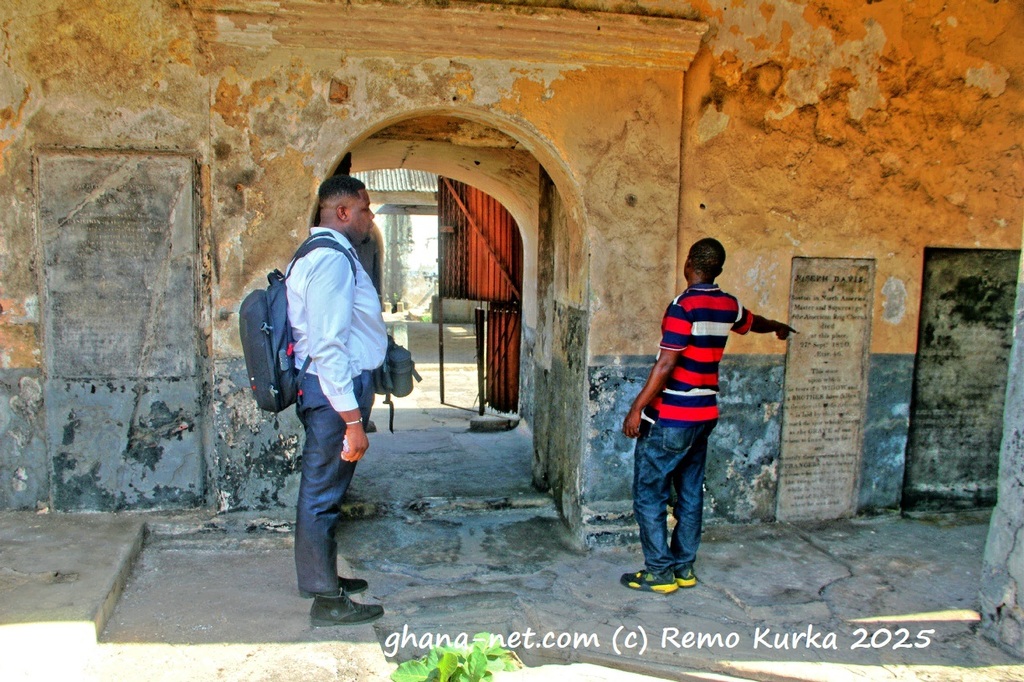
In the crumbling walls of James Fort, Jamestown, Accra, three weathered grave slabs have emerged as silent storytellers of a forgotten past. Their discovery and careful research mark a turning point in Ghana’s heritage documentation, revealing lives once entangled in trade, ambition, and colonial peril.
The work was undertaken by researcher Remo Kurka, who has become the first to systematically decode and contextualize these stones. His findings transform neglected epitaphs into vivid narratives, bridging centuries of silence.
The Forgotten Trio of James Fort
Francis Sylvester Jr. (1786) A 17‑year‑old London merchant’s son, sent to the Gold Coast to learn the family trade. His epitaph praises innocence and sincerity, yet his short life ended in fever, a reminder of how colonial ambition often claimed its own heirs.
Joseph Davis (1820) A seasoned Boston mariner, captain of the brig Cherub. His grave thanks “strangers” for compassionate burial rites, hinting at local kindness amid fever epidemics that killed nearly a third of European crews. His stone bridges oceans, mourning both in Accra and in Boston.
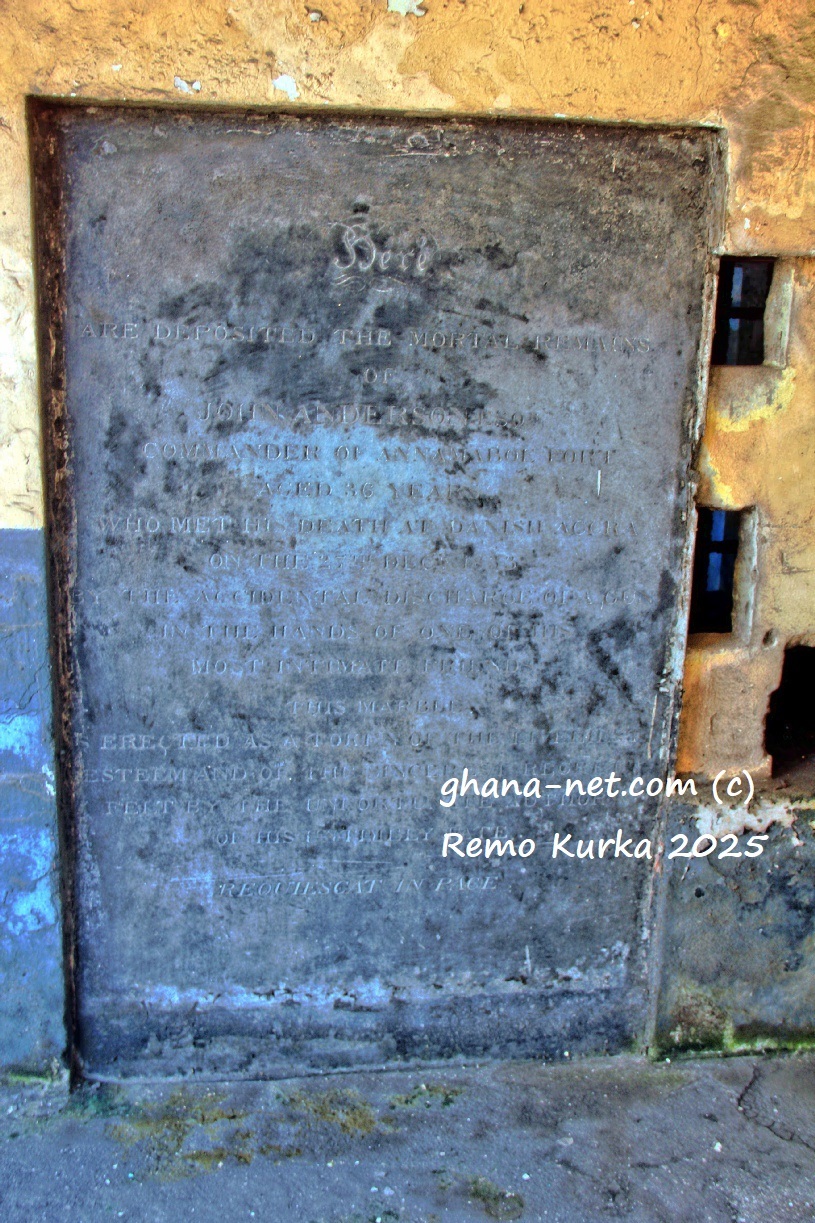
John Anderson (1801) Commander of the Nabob, who died in Danish Accra “through an unfortunate fall in the hands of his best friend.” His German‑inscribed slab reflects the multicultural swirl of Accra’s ports, where Danes, Brits, and locals mingled in commerce and calamity.
Together, these three epitaphs form a triptych of colonial fragility: youth, sailor, commander.
Research That Restores Memory
For centuries, these slabs were overlooked, fading into the fort’s decay. Through meticulous transcription, translation, and contextual research, Kurka has restored their voices. Each stone now stands not only as a memorial but as a historical document—evidence of the human cost of empire.
His motto, “Where traders became ghosts, and ghosts became history,” captures the essence of this work. Traders who once sought fortune in Accra became names etched in stone, and those stones now become history for future generations.
Why It Matters
James Fort was built in 1673 by the Royal African Company as a hub of the transatlantic slave trade. Its walls once confined thousands of Africans bound for ships. Today, the graves embedded in those same walls remind us that even the traders themselves were not immune to mortality, irony, and loss.
By documenting these slabs, Kurka ensures that colonial history in Ghana is not erased but retold—with nuance, humanity, and context.
A Gateway to Heritage
This research is featured on his dedicated James Fort site, part of a growing network of heritage projects across Ghana. Visitors are invited to explore the full stories of Francis, Joseph, and John, and to see how forgotten stones can become living history.
👉 Read more at: Forgotten Graves of James Fort, Jamestown – Three Slabs, Three Fates