Fifty Birds Promised: The Nkoko Nkitinkiti Questions
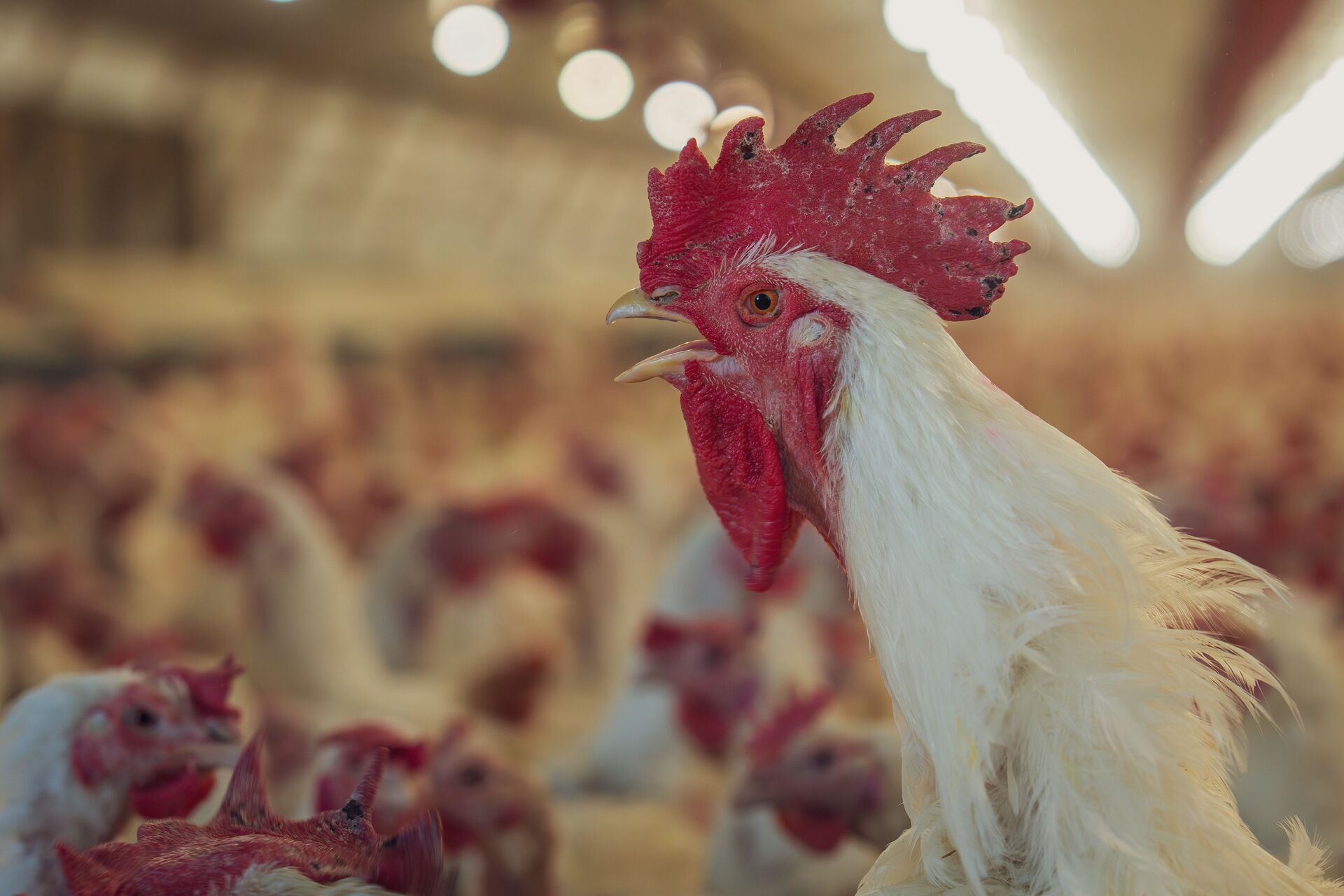
Fifty Birds Promised: The Nkoko Nkitinkiti Questions Nobody Has Answered
Ghana spent over GH¢200 million putting three million chickens into households. The Agriculture Minister told Parliament people were eating them. Here is what is on the record, what isn't, and which documents the public has never seen.
The admission
On Thursday 9 July 2026, the Minister for Food and Agriculture, Eric Opoku, appeared before Parliament's Assurance Committee and said something no minister says by choice.
People were eating the chickens.
Not selling them. Not breeding from them. Not building the household poultry enterprises that the Nkoko Nkitinkiti programme had been designed, funded and launched to create. Opoku told the committee that members of the public had been sending him videos of birds being slaughtered and eaten shortly after distribution, and that immediate consumption departed from the purpose of the programme.
It was an unusually frank thing to put on the parliamentary record, and it detonated a month of argument that is still running.
But the argument that followed has fixed almost entirely on the wrong question. Ghana has spent five weeks debating the character of the beneficiaries. It has spent considerably less time asking what the programme actually delivered to them, what it cost, and who was paid.
What was promised
President John Mahama launched Nkoko Nkitinkiti — the Household and Backyard Poultry Production Initiative — at Jubilee Park in Kumasi on 12 November 2025, as a flagship element of the Poultry Industry Revitalisation Programme under the broader Feed Ghana agenda.
The specification, as announced, was precise:
The programme as launched
- Three million birds distributed across all 276 constituencies
- 10,000 birds per constituency, free to beneficiaries
- 50 birds per household, plus feed support and technical guidance
- Around 60,000 households targeted at launch
- 50 anchor farmers supplied with 80,000 birds each — four million birds, roughly 10,000 tonnes of chicken — with housing, logistical and technical support
- Supporting infrastructure: 270 farmer service centres, expanded veterinary services, an agri-financing scheme for affordable poultry credit
- Projected cost: roughly GH¢200 million
Read that list again, because it matters. The birds were never the programme. The birds were one line in a programme that also promised feed, veterinary cover, training, service centres, credit and, eventually, processing capacity. That was the whole design, and the design was sound. A household given fifty chicks and nothing else has not been given a business. It has been given fifty animals that eat.
What arrived
Here the record becomes harder to follow.
The household count moved
At launch, three million birds were to reach about 60,000 households. By July 2026, Opoku told the Assurance Committee that three million birds had been procured for almost 80,000 households, at 200 beneficiaries per constituency.
Same three million birds. Twenty thousand more households. Either the per-household allocation quietly fell from fifty birds to something closer to thirty-eight, or the two figures are counting different things. Neither reading has been explained publicly, and nobody in Parliament has asked.
A lawmaker says the drop was far steeper
Speaking to Joy FM, a member of parliament said distribution had been uneven, with some constituencies seeing beneficiaries receive as few as two birds against the stated allocation of fifty, and called for a review of phase one before any expansion.
Fifty promised. Two delivered, in at least some places. If that account is accurate even in a minority of constituencies, it is a more serious finding than anything about consumption — and it points at distribution and logistics rather than at beneficiaries.
The feed did not keep pace
The Poultry Farmers Association of Ghana, which says it was consulted during the programme's design stage and welcomed the policy, described phase one as an abysmal failure. Its chief executive, Ali Mohammed, told Citi News that many beneficiaries received birds without adequate training in poultry management, and that delays in feed supply produced high mortality.
That is the association that supported the policy saying the rollout failed. It is not opposition noise.
And it reframes the consumption story entirely. A beneficiary account aired on a Rainbow Radio phone-in pointed to cost, not carelessness, as the reason birds were eaten. Fifty six-week-old birds with no feed delivery and no credit line are not an asset. They are a daily bill arriving at a household that was selected for the programme precisely because it was vulnerable.
You do not need a theory of Ghanaian character to explain what happened next. You need a delivery schedule.
The money, and what has not been published
The figure in general circulation is GH¢200 million. The Oforikrom MP, Michael Kwasi Aidoo, used it on Eyewitness News on 17 July 2026 in calling the programme a failure from the start, arguing that public money should have gone into training, financing, technology and infrastructure to build a resilient industry rather than into handing birds to individuals.
GH¢200 million across three million birds is roughly GH¢67 per bird.
That number, on its own, proves nothing. The birds were not day-old chicks at handover — the Ministry says they were brooded and vaccinated before distribution to reduce mortality, and beneficiaries received six-week-old birds. Six weeks of feed, brooding, vaccination, transport to 276 constituencies and extension support is where money legitimately goes. GH¢67 for a vaccinated six-week-old bird delivered to a rural household may be entirely reasonable.
It may also not be. Nobody outside the Ministry can currently tell, and that is the point.
Documents the public has never seen
- The supplier list. Which hatcheries supplied the three million birds? No names have been published.
- Unit costs. What was paid per bird, per bag of feed, per vaccination?
- The procurement method. Open tender, restricted tender, or sole-sourcing? Sole-source approvals are public documents at the Public Procurement Authority. None have been pointed to.
- The feed contracts. Feed was in the promise. Was it in the contracts? At what quantity, and on what delivery schedule?
- Delivery reconciliation. Three million birds were procured. How many reached households, in which constituencies, at what count per beneficiary?
- Mortality data. The Ministry brooded and vaccinated specifically to cut mortality. What was the actual rate?
None of this is exotic. It is the ordinary paperwork of a public contract, and in Ghana it is obtainable: the Right to Information Act, 2019 (Act 989) covers exactly this class of document. A request to the Ministry of Food and Agriculture for the Nkoko Nkitinkiti procurement records — suppliers, unit prices, quantities, delivery schedules, feed component — is a straightforward filing that any citizen or journalist can make.
The argument for publishing runs both ways, and it favours the government. If the numbers are clean, disclosure costs nothing and buys credibility that no press statement can. If they are not, the public is better served knowing before the next tranche of birds goes out than after.
Which brings us to the timing.
Four million more
In the same July appearance in which he told Parliament that beneficiaries were eating the birds, the Minister said the government plans to procure an additional four million.
Phase one has been called an abysmal failure by the national poultry farmers' association. A member of parliament says some beneficiaries got two birds instead of fifty. The feed arrived late or not at all. No value-for-money audit has been published.
And the order for phase two is larger than phase one.
In fairness: the government's case
Opoku has not conceded the programme has failed, and his defence deserves to be heard properly rather than caricatured.
Speaking to the Ghanaian Times in Accra, he maintained the programme remains on course and has recorded significant success, pointing to falling poultry prices: a chicken that sold for GH¢250 to GH¢300 in 2024 now sells at around GH¢100, and in some areas GH¢80. He attributes the fall to increased supply generated by the programme, alongside government intervention in feed costs, and notes a sustained glut in egg supply that he says did not exist before the policy. He argues that critics have not established a basis for calling it a failure, and makes the pointed observation that birds are reared for consumption in the first place.
He has also said the evidence shows most beneficiaries are raising birds commercially, and that thousands of households have received six-week-old chicks with many expanding their stock.
Two things can be said about this. The first is that a price collapse from GH¢300 to GH¢100 is a real and significant consumer benefit, and if the programme caused it, that is a genuine achievement that its critics have been too quick to wave away.
The second is that causation has not been demonstrated. Poultry prices respond to feed costs, import volumes, exchange rates and season. The Minister himself credits feed-cost intervention alongside the bird distribution. Isolating the contribution of Nkoko Nkitinkiti from those other factors requires analysis that has not been published either.
There is also a figure worth resolving. Government has repeatedly put Ghana's poultry import bill at around US$300 million a year, against more than 300,000 tonnes of imported poultry meat. Aidoo, arguing against the programme, cited roughly US$600 million. Both cannot be right, and the size of the problem determines whether GH¢200 million was a serious intervention or a gesture.
The wrong defendant
On 14 July 2026, during parliamentary deliberations on the programme, the Minority Leader Alexander Afenyo-Markin called for the Economic and Organised Crime Office to investigate beneficiaries who had consumed the birds, arguing that as state funds were involved the misuse amounted to looting regardless of the sums involved.
Set aside the politics and look at what is being proposed: that Ghana's serious-crime agency investigate poor rural households, many of them women-headed and selected for the programme on the basis of vulnerability, for eating chickens delivered to them without the feed required to keep the chickens alive.
The state promised a household fifty birds, feed, training and veterinary support. On the available record it delivered, in at least some cases, a fraction of the birds and little of the rest. The proposal on the table is to investigate the household.
There is a case for accountability here. It does not begin at the bottom.
What would have had to be true
A poultry sector does not fail for want of birds. Ghana has never lacked chickens; it lacks the structure around them. Every serious analysis of the sector names the same constraints, and the programme's own launch document named most of them too:
- Feed. The single largest cost in poultry production and the reason Ghanaian birds struggle against imports. Delivered late or not at all in phase one.
- Veterinary cover. Promised as expanded services. Coverage in the rollout is undocumented.
- Training. The farmers' association says many beneficiaries got birds without it.
- Cold chain and processing. A processing plant was announced for Bechem in Ahafo, and procurement for a facility serving Bono, Ashanti and Bono East was described as ongoing at launch. Status unreported.
- A buyer. The one thing that turns a bird into an income. A poultry farmer and lecturer at Takoradi Technical University, Thomas Cudjoe, told the Ghana News Agency in August 2026 that the government should establish poultry market and processing centres so beneficiaries can sell birds on maturity — a request that would be unnecessary if the market side had been built.
Hand a vulnerable household fifty chicks without those five things and the outcome is not a mystery, a scandal, or a failure of national character. It is arithmetic. The household will eat the chickens, because the chickens are food and the household is hungry, and the alternative — buying feed it cannot afford for eight weeks to reach a market that does not exist — is not an alternative.
The programme did not fail because Ghanaians ate the birds. Ghanaians ate the birds because the programme had already failed, quietly, in a procurement schedule that nobody has published.
Six questions
These are not rhetorical. Each has a documentary answer that exists somewhere in the Ministry of Food and Agriculture and has not been made public:
- Which suppliers were contracted, and at what unit price per bird?
- Was the procurement openly tendered, restricted, or sole-sourced?
- What quantity of feed was contracted, and what was the delivery schedule against the bird distribution schedule?
- How many birds actually reached households, and how does that reconcile against three million procured?
- What was the mortality rate between procurement and maturity?
- What is the evidential basis for attributing the fall in poultry prices to this programme rather than to feed-cost intervention, import volumes or seasonality?
Answer those six and the argument ends, in one direction or the other. Until they are answered, every claim made about Nkoko Nkitinkiti by anyone — including the claims in this article — rests on a partial record.
That is not an accusation. It is the situation. And it is the government, not its critics, that holds the documents which would resolve it.