Labadi Beach: 25 Years On, Flattened Before Dawn
Ghana Tourism News · Accra · 12 October 2026
Labadi: Twenty-Five Years On, Accra's Beach Flattened Before Dawn
I filmed and photographed Labadi Beach for a quarter of a century. On 2 October 2026 soldiers flattened it in a few hours. Ten days later there have been apologies, a land dispute, promises of compensation and a committee. The beach is still rubble.
By Remo Kurka · Video archive 2003–2017 · Photo gallery 2001–2017
A beach I have known for 25 years
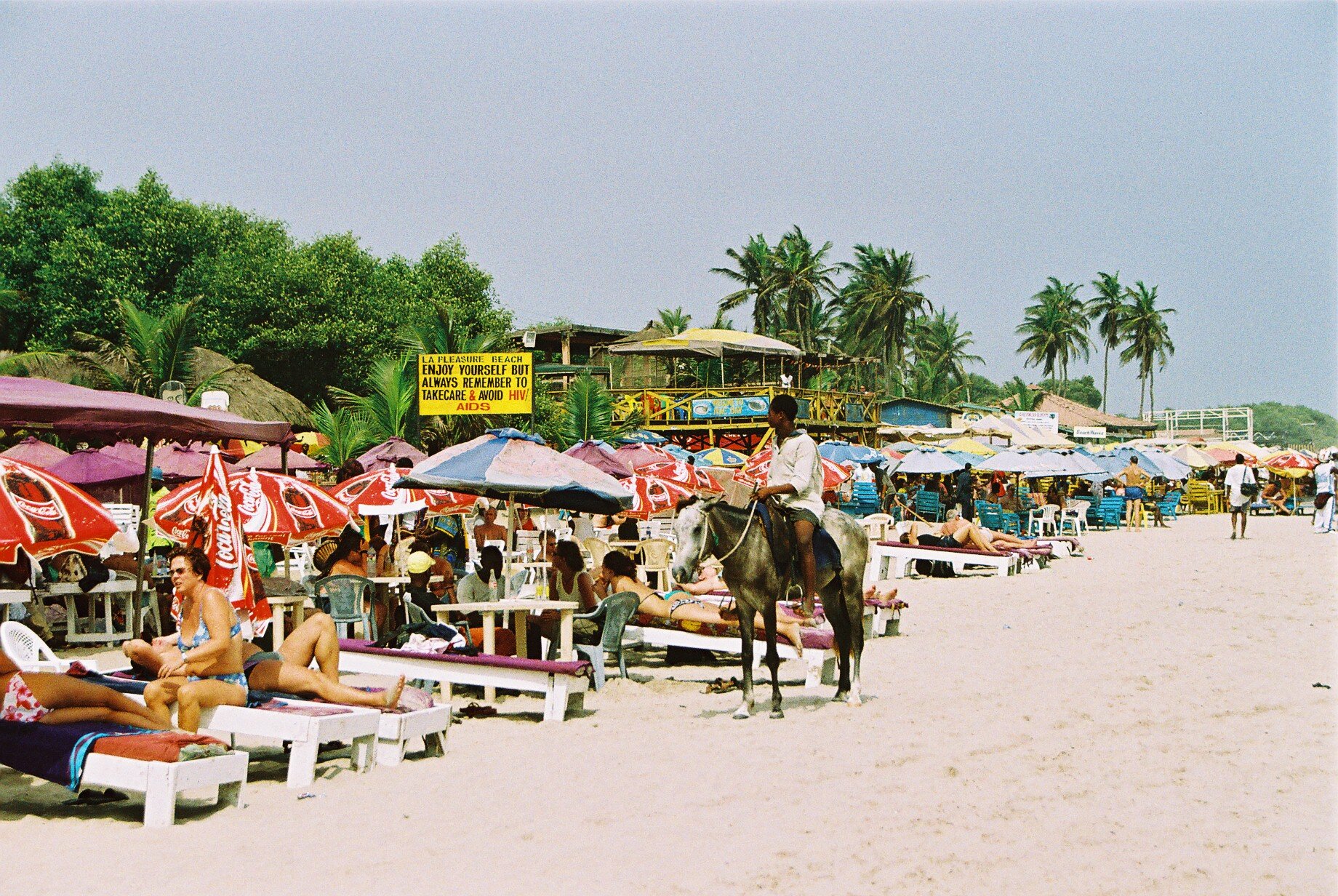
My first pictures of La Pleasure Beach, the beach the world calls Labadi, date from 2001. My oldest surviving video is from February 2003. Since then I have come back again and again: in 2008, 2009, 2016 and 2017 with a camera, and for many years after with my eyes. What these recordings show is not a squatter camp that sprang up overnight. They show a living beach economy that grew over decades, in full view of every authority in Accra: bars and chop bars, drummers and dancers, horse boys, hawkers, lifeguards of sorts, families, tourists and loud music.
The 2009 clip is worth watching closely. It shows a hard dispute over the music volume on the beach. Even then, the tension between bars, neighbours and hotels was out in the open, and nobody called for soldiers. The 2016 drone flights show the long line of structures from the air, exactly the kind of beach clubs and sheds that SSNIT now calls "unauthorised". They were visible to anybody, from the hotel terraces and from the sky, ten years before the bulldozers came.
The Labadi video archive, 2003–2017
Choose a video from the list. All recordings are my own.
Now playing: Labadi Beach, February 2003
2 October 2026: four in the morning
At about 4am on Friday, 2 October, soldiers of the 48 Engineer Regiment, the Military Police and the Fifth Battalion, with the Ghana Police Service, moved onto La Pleasure Beach and ordered everyone off. Polo Beach Club, Vienna City Club, Pera Beach and rows of bars, shops, stalls and sheds were pulled down within hours. People were given minutes to rescue their belongings. The local MP accused soldiers of firing shots. Journalists and bloggers who filmed were beaten. The full account of that morning, and of the contradictory official explanations, is in my first report: Labadi Beach Flattened at 4am: SSNIT, National Security and a Story That Does Not Add Up.
What follows is what has happened since.
Ten days later: the apologies
On 7 October the La Traditional Council met government at the National Security Council Secretariat, in a meeting chaired by the National Security Coordinator. SSNIT, the management of the Labadi Beach Hotel, the Minister for Local Government and the Greater Accra Regional Minister were all at the table. Afterwards the La Shikitele, Nii Adjei Koofeh IV, told the press what had been said. The Council had told the officials it was aggrieved and unhappy, because the landowners had not been engaged at all.
National Security's answer, as the chief reported it, says a great deal about how this operation was planned:
The Council replied that, as the landowners, it is a primary stakeholder. Then the remarkable part: both SSNIT and National Security apologised to the Council for failing to engage it before the demolition. The chief also took apart SSNIT's earlier public statement, which had said SSNIT would "continue" to engage the traditional authorities. That wording, he said, gave the false impression that talks had already taken place. They had not.
The result of the meeting: SSNIT's redevelopment plans for the site are on hold. A committee is to examine the issues and SSNIT's plans, with the aim of what the chief called an amicable settlement. The Council insists that the La people, and the La indigenes who worked at the beach, must be protected in any future arrangement, and that the vendors who traded there must be considered after any redevelopment. His summary was short and clear:
Who owns the beach? The 1967 question
The apology does not settle the land question. At the National Security meeting, SSNIT explained that it relies on a land acquisition made by government in 1967, connected with the Trade Fair development. In its reading, the southern part of that land was given for the hotels, including the beach.
The La Traditional Council rejects that on three grounds:
- No compensation. The land was taken from the La Stool without compensation, so nothing should happen on it without La's involvement.
- The boundary. The southern portion SSNIT points to does not cover the whole beach. The Council's own documents suggest parts of the affected beach lie outside the 1967 acquisition altogether.
- Control on the ground. The Council says it has controlled the beach for years and collects rent from those who operate there. It names 85 rent-paying vendors, and says the Labadi Beach Hotel itself pays the Council rent for the part of the beachfront it uses.
The Council has challenged SSNIT to produce the official documents proving its ownership, and has threatened legal action.
Think about the third point for a moment. If the hotel pays La rent for its own piece of beach, it is hard to see how SSNIT can claim the rest of the beach was always its own. And the court papers from the earlier Polo Beach Club dispute only make things murkier. The December 2024 injunction protected about 0.54 acres used as a car park and event venue, under the hotel's lease agreement of 27 November 1990. A lease means somebody leased the land to the hotel. It did not simply fall into SSNIT's lap in 1967.
There is a further twist that neither side likes to mention. One legal analysis published this month argues that under Ghana's Land Act of 2020 and the Constitution, the foreshore, meaning the sand between high and low water plus a strip of land inland from it, is public land vested in the President on behalf of the people. On that reading no stool, family or hotel can own it, and the hotels hold leases for their plots while the beach itself is only used with permission. If that is right, the people of Ghana own the very sand the state's soldiers cleared for a state hotel.
Shifting reasons
Every week brings a new justification. On 2 October it was the hotel's safety, tranquillity and reputation. SSNIT then added fire risk, sanitation, guest privacy and the coastal ecosystem. Now a source close to SSNIT management, speaking to The Herald, says illegal structures had blocked the hotel's drainage and caused flooding inside the hotel and on the main road. At the National Security meeting, according to reports, SSNIT said upgrading the beach was essential because conditions there did not match the standing of a five-star and a four-star hotel.
When the reasons keep changing, the most honest one is usually the one said in the closed room. The beach did not look good enough for the hotels, and SSNIT had already announced its plans to expand the Labadi Beach Hotel.
Compensation: promised, not defined
Before Parliament's Local Government committee, the MP for La Dadekotopon and Deputy Minister for Local Government, Chieftaincy and Religious Affairs, Rita Naa Odoley Sowah, announced that a committee would be formed to decide compensation for those affected. She said the data of all affected persons had been compiled and the committee would be constituted early the following week. The type of compensation, she admitted, has not been decided. The committee will also consider those who may need relocating as well as those who need money. She stressed that La Pleasure Beach is being handled separately from Laboma, which falls under a different arrangement.
The management of La Pleasure Beach says no compensation arrangement has been agreed, and no figures can be discussed until the committee has collected its data. In other words: so far, nobody has received a single cedi.
Will the beach reopen?
La Pleasure Beach management says it hopes to reopen within three weeks, depending on how quickly the debris is cleared and basic facilities are restored. Its communications director, Abdul Rahman Ashittey, says vendors have been told not to put up permanent structures once activities resume. He also reminds the country of something rarely mentioned in Accra's offices: the beach's income helped to set up a development fund for the La community. Shut the beach for good, and that money is gone too.
That is the real choice ahead. Either La Pleasure Beach comes back as a people's beach, regulated and cleaner but still affordable, still Ghanaian and still La's. Or it becomes a polished frontage for the two hotels, where a night was always beyond ordinary Ghanaians and even a meal has become a luxury for conference delegates and NGO staff. The committee's work will decide which.
The soldiers: a 14-day ultimatum
The Ghana Journalists Association has given the Ghana Armed Forces 14 days to give a full account of its investigation into the alleged assaults at La Pleasure Beach. These include the blogger Sika Official and the Bullet TV journalist Philip Abutiate. The GJA wants to know what disciplinary action has been taken against those responsible. If the answer is unsatisfactory, it says it will take the matter further through legal, institutional and public channels. The deadline runs out around 21 October. Statement videos on social media also appear to show further people, among them foreign business owners from the beach, displaying injuries they say were caused by soldiers. These accounts are still being checked.
What 25 years of footage tells us
Watch the videos above from 2003 to 2017 and one thing is obvious. The structures SSNIT and National Security called "unauthorised" did not appear last year. They grew in plain sight for decades, while rents were collected, taxes were paid, tourism brochures praised the beach, and every government from Kufuor to Mills, Mahama, Akufo-Addo and Mahama again looked on.
In Germany or the UK, where I spend part of each year, such long tolerated use would have needed a court decision, proper notice, a right of appeal and almost certainly compensation, and nobody would have acted while the land was still before a judge. In Accra the case was still open, and the army decided it. Ten days on, the government's men have apologised for not asking first. The beach is still rubble, the workers are still without income, and the owners of the land are still waiting to see the documents.
Questions still open
- Where are SSNIT's documents? If the 1967 acquisition includes the beach, publish the site plan and the boundaries.
- Why does the Labadi Beach Hotel pay rent to the La Traditional Council if the beach already belongs to SSNIT?
- Who decided that the landowners did not "need to know", and will that person be named?
- When will the compensation committee meet, who sits on it, and when will the first payment be made?
- Will the Ghana Armed Forces answer the GJA within its 14 days, and will the soldiers who beat journalists and workers be disciplined?
- What exactly are SSNIT's redevelopment plans, and will they be shown to the La people before anything is built?
- Who looked away for 25 years, and why is the bill paid only by the poorest people on the beach?
Visiting Accra's beaches now
Until La Pleasure Beach reopens, the best options near the city are Bojo Beach to the west for a day out, Kokrobite for music and overnight stays, and Sakumono for a quieter break to the east. Check before you go. My updated guide is at ghana-net.com: Greater Accra beaches.
Accra and coastal tours
A guided tour is an easy way to see Accra's coast, forts and markets with a local guide. Entrance fees are included in the tour price; tips are not included but always welcome.
Verified and fact-checked: 12 October 2026. Videos: Remo Kurka, 2003–2017. Sources: MyJoyOnline, Citi Newsroom, Graphic Online, GhanaWeb, Ghanaian Times, Adom Online, DailyGuide Network, Asaase Radio, The Ghana Report, Modern Ghana, YEN.com.gh, The Herald and the Ghana Journalists Association.