Operation Free-Range Fail: The Great Chicken Uprising
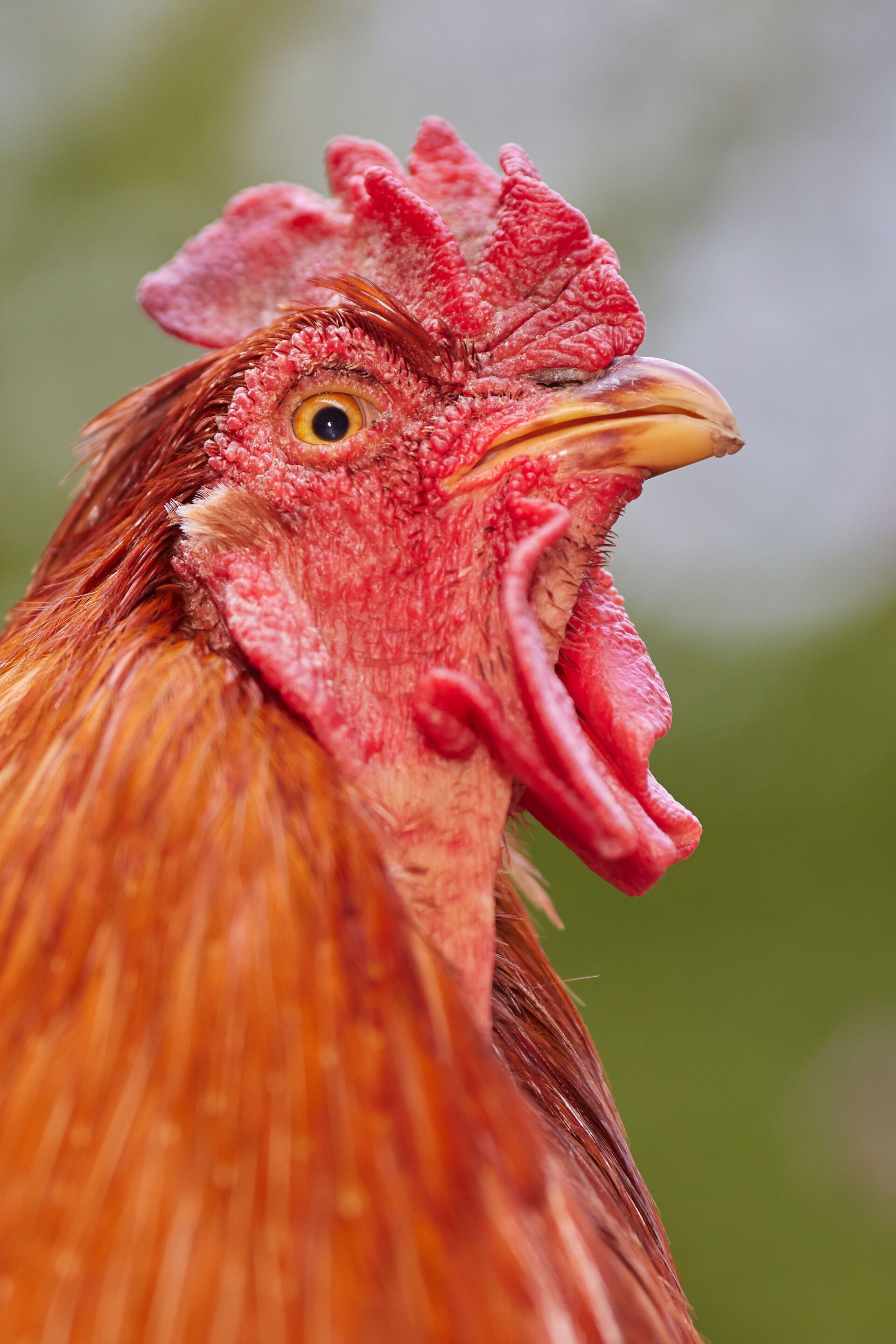
why did nkoko nkitinkiti fail, nkoko nkitinkiti beneficiaries ate birds, ghana chicken programme criticism
Operation Free-Range Fail: The Great Chicken Uprising
A satire. The chickens are fictional. The numbers are not.
I. The Launch
The banner was forty feet long and cost more than the feed.
It hung over Jubilee Park in the hard white light of a Ghanaian afternoon, and on it, rendered at a scale normally reserved for saints and football champions, was the face of the Honourable Dr. Ebenezer Kwakwa, Minister for Poultry Affairs and Feathered Empowerment. Beneath his chin, in letters visible from low orbit: NKOKO NKITINKITI — A CHICKEN IN EVERY YARD, A FUTURE IN EVERY POT.
Nobody on the organising committee noticed the second half of that slogan until much later. By then the birds had noticed.
Dr. Kwakwa took the microphone. He was wearing a commemorative T-shirt bearing his own face, over a shirt bearing the programme logo, over, one assumes, a vest bearing something. Four thousand farmers sat on plastic chairs in the sun. Eleven consultants sat under the canopy in the shade. This is the natural order of things and no one questioned it.
"My people!" he boomed. "Today we do not merely distribute chickens. Today we distribute dignity. Fifty birds to every household. Feed. Technical guidance. Vaccination! We shall no longer be a nation that imports what God has given us the capacity to produce!"
The crowd roared. A brass band played. Someone released doves, which was thematically confusing.
And in a wire crate at the rear of the stage, waiting to be handed ceremonially to a selected beneficiary for the cameras, a young hen named Adjoa listened to every word.
She would remember the part about dignity.
II. The Briefing
Six weeks later, in a disused feed silo outside Techiman, the Poultry High Command convened its emergency session.
General Clucksworth — three stars, one wattle, decorated for surviving two Christmases and a christening — stood before a map of the Republic stuck with pins. Red pins for constituencies. Black pins for constituencies where the birds had already been eaten.
The map was overwhelmingly black.
"Report," he said.
Captain Hensley of Intelligence stepped forward, dragging a clipboard. "Sir. Distribution began in April. Fifty birds per household. Vaccinated, brooded, delivered."
"And?"
"Sir, the feed did not arrive with the birds. In many constituencies, the feed has still not arrived."
A low, dangerous clucking filled the silo.
"Continue."
"The beneficiaries, sir, were given fifty living animals and no means to feed them. So they applied a solution of considerable operational elegance." Hensley swallowed. "They ate them, sir. Median time from distribution to consumption: four days. In one district, ninety minutes. That household is currently celebrating what they have described as the most successful government programme in the history of the Fourth Republic."
Somewhere at the back, a young cockerel fainted into a pile of husks.
"Ninety minutes," repeated Clucksworth quietly.
"There was a fire already burning, sir. Timing was unfortunate."
III. Grievances of the Poultry Republic
What followed was not, the chickens would later insist, an uprising. It was an audit.
The Poultry Republic had, over decades of quiet observation from beneath tables and behind compound walls, absorbed the complete operating system of the modern development programme. They knew what a stakeholder was. They knew what a per diem was. They had watched a consultant bill nine hundred dollars a day to produce a slide deck with a stock photo of a chicken on it — a chicken, incidentally, who was Belgian, had never set foot in Africa, and whose likeness had been licensed without her consent for eleven separate national poultry strategies across four countries.
The Command issued a formal statement of grievance, drafted in the passive voice, because they had learned that too.
It has been observed that three million birds were procured.
It has been noted that eighty thousand households were targeted.
It has further been observed that the word "distributed" was used throughout the programme documentation as though it were a neutral logistical term, when in fact, from the perspective of the item being distributed, it is a sentence.
Concern is hereby raised regarding the phrase "beneficiary." At no point was it clarified who, precisely, was benefiting.
The statement was faxed to the Ministry. The Ministry's fax machine had not worked since 2019, which the chickens took, correctly, as an answer.
IV. Operation Free-Range Fail
They moved on a Tuesday, because Tuesday is when nothing happens in a ministry.
Tactical coops rolled through the night on repurposed trotro axles. A reconnaissance wing of guinea fowl — mercenaries, expensive, worth it — ran silent overwatch. Special forces descended from the backs of goats who had agreed to participate on the express condition that this be understood as a one-time arrangement and not a precedent.
Dr. Kwakwa was in his office at the Ministry, drafting a press release titled NKOKO NKITINKITI: EARLY INDICATORS OVERWHELMINGLY POSITIVE, when the door came off its hinges in a blizzard of feathers.
He looked up. Forty-one chickens looked back.
"HANDS UP, HONOURABLE," screeched Captain Hensley.
"Is this," said Dr. Kwakwa carefully, "a sensitisation exercise? Because I was not briefed on a sensitisation exercise."
General Clucksworth walked in slowly, beret tilted, and hopped onto the desk.
"Honourable Minister," he said. "You stood in Kumasi under a picture of your own face and you promised us dignity. You said we would roam. You said we would multiply. You said we would build the nation."
"All of which remains policy!"
"Ninety minutes, Honourable."
"That is one household. One! You cannot judge a national programme by outliers —"
"Then judge it by the median," said Clucksworth. "The median was four days."
Dr. Kwakwa opened his mouth. Closed it. Reached, from long institutional instinct, for the only weapon he had ever been trained to use.
"I propose," he said, "the establishment of a Committee of Inquiry."
The chickens exchanged glances.
"He's going to survive this," muttered Hensley.
V. The Tribunal
He did not survive it. The Poultry Republic, unlike certain other republics in the neighbourhood, has a functioning judiciary and a genuinely independent Auditor-General, a bantam hen named Yaa who has never in her life accepted a T-shirt from anybody.
The charges were read at dawn, over a drum made from an empty feed sack:
- Fraudulent recruitment into a scheme whose end-user was never disclosed to the participants, said end-user being the stomach of the participant's own custodian.
- Structural negligence, in that fifty living creatures were delivered to households alongside precisely zero kilograms of the feed that had been publicly promised, thereby converting a livelihoods programme into a dinner invitation by administrative accident.
- Aggravated use of the word "empowerment" in circumstances where the party being empowered was empowered chiefly to acquire protein.
- Reckless deployment of the phrase "produce many children" in relation to a population whose children were subsequently served with banku.
The defence, delivered with feeling, consisted of the words "but the economy" and a forty-slide presentation. Slide 34 contained a photograph of the Belgian hen. She was called as a witness. Her testimony was devastating and delivered entirely in French.
The verdict took eleven minutes.
Sentence: Dr. Ebenezer Kwakwa is to personally hand-rear one thousand birds to maturity, unassisted, on the exact budget per bird allocated under the programme he launched. He is to file weekly progress reports by interpretive dance. He is permanently barred from using the words "empowerment," "flagship," "sustainable," or "game-changer" in any agricultural context. He is to eat only layer mash for the duration.
He appealed the layer mash. The appeal was denied on the grounds that it had been considered adequate nutrition for others.
VI. The Address
Clucksworth met the press on the steps of the silo. Somebody had made him a banner. He had it taken down.
"We want to be clear about something," he said, "because it will be misreported. We do not object to being eaten. We are chickens. We have made our peace with the arc of the story."
"What we object to is the ceremony. The launch. The T-shirt. The forty-foot face. The word 'dignity' spoken over a crate of animals on their way to a fire that was already lit. If you are going to eat us, eat us. But do not hold a press conference about our future first."
He paused, and looked directly into the cameras.
"And understand that we are not the only constituency in this country that has been distributed."
Somewhere beyond the tree line, a rooster crowed the anthem of the revolution, three notes, over and over, until the sun came up:
Cluck the launch.
Cluck the banner.
Cluck the feed that never came.
— The End —
A satirical treatment of the same programme, Operation Free-Range Fail, is published:
A satirical treatment