Who Owns the Shore? La, the Land, and a Republic Built on Colonial Law
Commentary · Land · La, Accra · 22 October 2026
Who Owns the Shore? La, the Land, and a Republic Built on Colonial Law
Three weeks after soldiers flattened La's beachfront before dawn, the people of La have answered with paper. Their lawyer says the land is theirs, and that the grand hotels standing on it are tenants, not owners. The state says otherwise, and points to a law written in 2020. But this question was fought once before, in London, in 1898, and La's side won.
La's claim: we are the landlords
The La community has gone on the offensive. Its lawyer, Nsiah Akuetteh, told a press conference that legal action has already been started over what he calls the unauthorised occupation of La land, and that neither La Palm nor SSNIT can redevelop land that does not belong to them. If they try, he said, it is trespass.
The community now presents land documents which, it says, show what La has always maintained: the land belongs to La, and the hotels hold it on lease. The hotels do indeed hold leases. The Labadi Beach Hotel's lease agreement dates from 27 November 1990. The Polo Beach Club, demolished on 2 October, held a 20-year lease from the La Stool, granted in June 2022 for GH¢1.5 million.
A tenant does not own the house. That is La's argument in one sentence.
What La is not saying
La is not saying "no development". Its lawyer was clear that the community remains open to investment, but that any plan must start with dialogue and an agreement with the people who own the land. Money and security forces, he said, are no substitute for ownership.
The state's case: 1967, and a law from 2020
The other side has two arguments, and fairness demands that both are stated.
First, 1967. SSNIT, which owns both the Labadi Beach Hotel and the La Palm Royal Beach Hotel, maintains that the government acquired the land in 1967 for the Trade Fair. The La Traditional Council disputes this. SSNIT and National Security have since apologised to the Council, but for not consulting it before the demolition, not for the demolition itself, and not by giving up the claim to the land.
Second, the shore itself. Under the Land Act of 2020, the foreshore, the strip between the high- and low-water marks and a band of land behind it, is public land vested in the President on behalf of the people. On that reading, nobody owns the beach: not a stool, not a family, not a hotel. The hotels lease the dry land behind it, and the sand in front is used only with permission.
Notice the dates. The hotel lease: 1990. La's customary ownership: centuries. The law that is now used to say the beach belongs to the state: 2020.
Can a law from 2020 take away what a people held for centuries, and leased out in 1990?
1898: the last time someone tried this
This is not the first time a government has looked at Gold Coast land and decided it belonged to the state.
In 1896 and 1897, the British colonial government brought forward the Crown Lands Bill and the Lands Bill. Their purpose: to put all so-called "unused" or "waste" land under the control of the colonial government. In plain words, land that the colonisers did not see being farmed would become the Crown's.
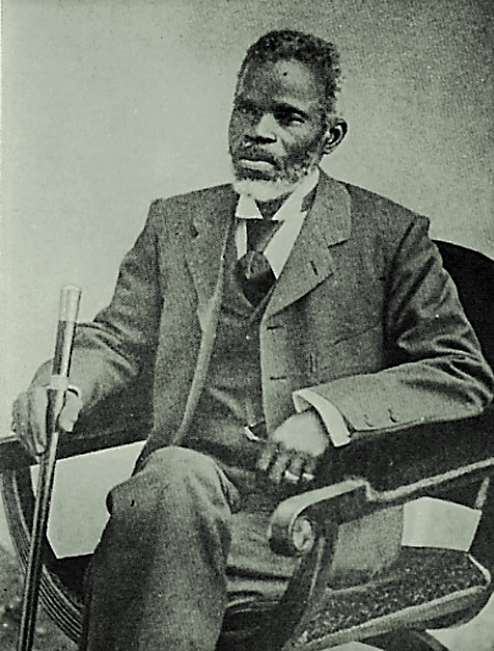
The people of the Gold Coast refused. In Cape Coast in 1897, they founded the Aborigines' Rights Protection Society. Its president, and one of its founders and financiers, was Jacob Wilson Sey, Kwaa Bonyi, born in 1832 in a fishing village and remembered as the Gold Coast's first millionaire.
In 1898, Sey led a delegation to London and put the case before the Colonial Secretary, Joseph Chamberlain. They came home with the assurance that native law would remain and prevail in matters of land. The bill was withdrawn. The land stayed with its people.
A Fante merchant stopped the British Empire from taking the land. More than a century later, the question is back, and this time the claimant speaks for the Republic.
The colonial inheritance
Where does the idea come from that the shore belongs to the state? Not from Ga custom. In English common law, the foreshore has traditionally belonged to the Crown. When Ghana's law today vests the foreshore in the state, it follows the legal tradition of the very power that Sey faced in London.
That is not an accident. Ghana's legal system, like its borders, was inherited from colonial rule. The Republic took over the framework the British left behind, and with it, the reflex that the state may claim what the people had long held under their own law.
This is the uncomfortable truth behind the bulldozers at La: a modern African state using a colonial concept against an African community whose rights are older than the state itself.
An open question
Whether the victory of 1898 explicitly covered the beach strip, or only the land behind it, is a question for the courts and for the documents La has now put on the table. It deserves a clear answer, in public, not behind closed doors.
Who pays for the argument
While lawyers argue, the people who worked on La's beach have lost everything. Bar owners, cooks, drummers, horse handlers, cleaners and traders were ordered off the sand at four in the morning on 2 October. Many had paid rent to the traditional authorities for years. Their businesses were demolished before any court had decided who owns the land they stood on.
That is the part no document can repair. Whoever wins in court, the workers of La have already lost.
Labadi: twenty-five years on, flattened before dawn Labadi photo gallery 2001–2017
My view
I have photographed Labadi for twenty-five years. I have watched the hotels grow, the bars change hands, and the crowds come every weekend. In all those years, nobody ever told me the beach belonged to the President.
The Republic of Ghana, like nearly every country in Africa, is a construct of the colonial era: its borders drawn in Europe, its law copied from London. The people of La were here before that construct, and their land law is older than any act of Parliament in Accra.
If the state believes it owns the shore, let it show its documents from 1967 next to La's documents, in public, and let the courts decide. Until then, demolitions before dawn are not the rule of law. They are the rule of force.
Jacob Wilson Sey travelled to London so that the land would stay with its people. It would be a bitter irony if what the British Empire could not take in 1898, an independent Ghana takes in 2026.
Explore Accra with local guides
Accra's history, Jamestown, the coast and the city's culture, with local guides. Entrance fees are included in the tour price; tips are not included but always welcome.
Sources
- MyJoyOnline and GhanaWeb: the La community's press conference with lawyer Nsiah Akuetteh, October 2026.
- YEN.com.gh and Nkonkonsa: the Polo Beach Club lawsuit, its 2022 lease from the La Stool, and the Labadi Beach Hotel lease of 27 November 1990.
- YEN.com.gh and Modern Ghana: the demolition of 2 October 2026 and SSNIT's statement.
- MyJoyOnline and GhanaWeb: "The Labadi shoreline demolitions: Who owns the beach?", on the Land Act 2020 and the foreshore.
- Earlier reporting on SSNIT's 1967 Trade Fair acquisition claim and its apology to the La Traditional Council.
- On Jacob Wilson Sey and the ARPS: historical accounts of the 1897 Lands Bill and the 1898 London delegation.
Commentary by Remo Kurka. Fact-checked: 22 October 2026. The opinions in the section "My view" are the author's own. Facts are sourced as listed above. ghanaweb-news.com carries no Google advertising.