Atewa: The Forest Ghana Keeps Saving and Never Protects
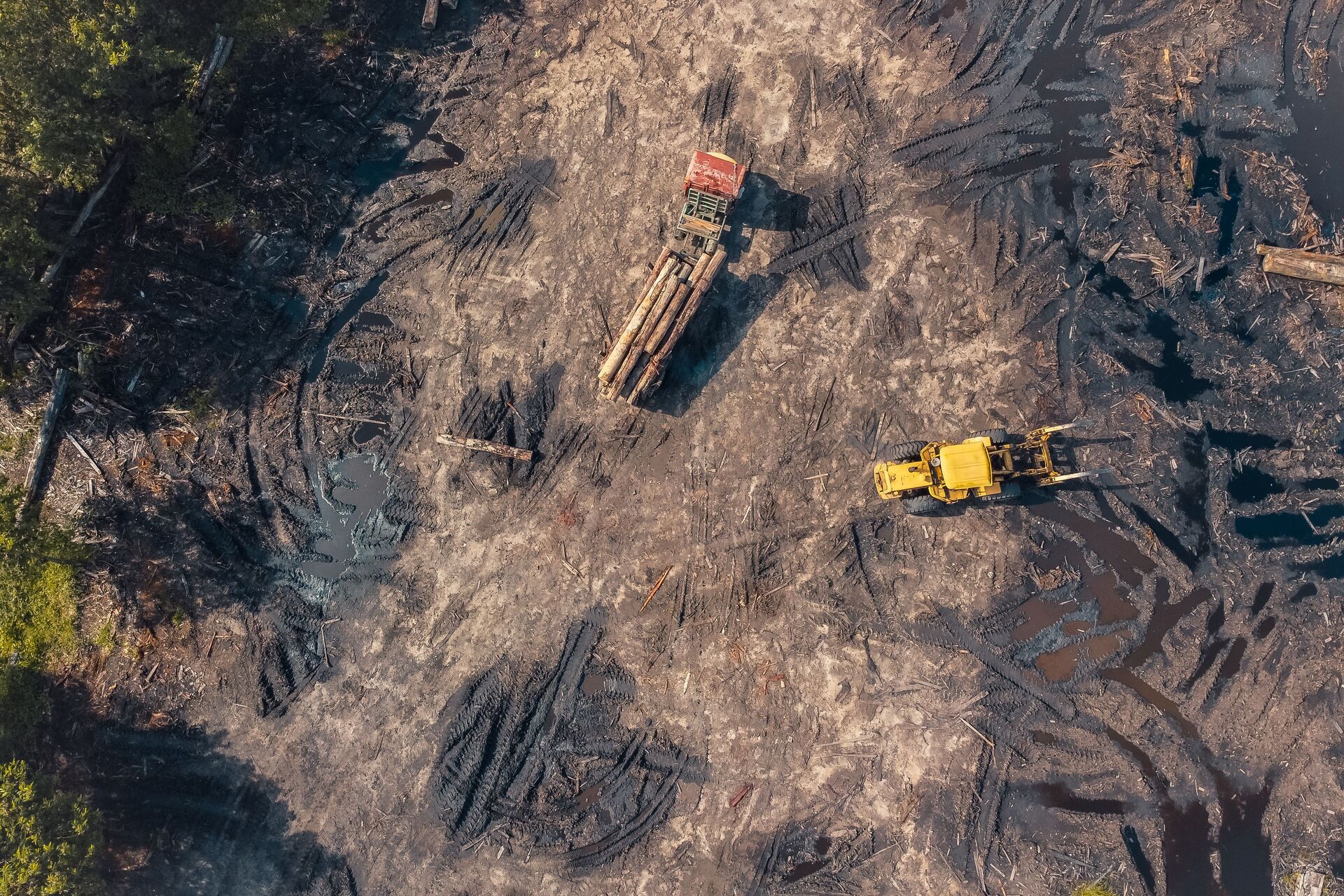
Atiwa forest Ghana, , LI 2462 repeal, and bauxite mining
Below, investigative report by (c) GhanaWeb-News 21st August 2026
Environment · Eastern Region
Atewa: The Forest Ghana Keeps Saving and Never Protects
It holds a butterfly found nowhere else on earth, feeds the rivers that water five million people including Accra, and sits on roughly 150 million tonnes of bauxite. Ghana has rescued it four times in eight years. It has never once given it the protection that would end the argument.
In this report
What is actually up there
The Atewa Range — you will also see it written Atiwa, and the district carries that spelling — runs roughly north to south in the Akyem Abuakwa country of south-eastern Ghana, near Kibi, south-west of the Kwahu Plateau. Steep-sided hills with unusually flat summits. Those flat tops are the last surviving fragment of an ancient peneplain that once covered the whole of southern Ghana, and they are the reason for everything that follows: flat, ancient, deeply weathered summits are precisely how bauxite forms.
The reserve covers roughly 263 square kilometres, of which about 17,400 hectares is upland evergreen forest — a forest type so rare in Ghana that Atewa is one of only two reserves in the country that has it. It was gazetted in 1926, and it is worth being precise about why. It was not reserved for timber. It was reserved to protect a watershed.
Ghana’s own government classifies it a Globally Significant Biodiversity Area. Internationally it is a Key Biodiversity Area and an Important Bird Area. At least fifty mammal species live in it. But the biodiversity, remarkable as it is, is not the argument that should settle this.
The argument that should settle it is water. Atewa holds the headwaters of the Birim, the Densu and the Ayensu, and the tributaries that feed them. Those rivers supply drinking water to more than five million Ghanaians, Accra among them. Fifty-three communities live on the edge of the forest and depend on it directly. This is not a scenic asset. It is the water tank for the capital city of the Republic.
A century ago the colonial forestry service understood that if you want water in Accra, you leave the trees on the hills above Kibi. That was the whole point of the reserve, and it is still the whole point.
The reserve that is not being destroyed
Here is where honest reporting has to part company with the mood of the moment, because Atewa is routinely swept into the general galamsey catastrophe and the numbers do not support it.
The Forestry Commission’s national satellite verification, released in February 2026 with data to 31 December 2024, found 8,923.8 hectares of forest reserve impacted by illegal mining nationwide. Ashanti accounted for 4,948.9 hectares across thirteen reserves. Western North took 2,195.7 across twelve. The Western Region 1,301.5 across eleven.
The Eastern Region — Atewa’s region, containing the reserve most fought over in the entire country — recorded 56.7 hectares across three reserves.
Read that in proportion. The Eastern Region accounts for roughly six-tenths of one per cent of the recorded national damage. Ashanti accounts for more than fifty-five per cent. Whatever else is true, Atewa has not been hollowed out the way Oda River, Upper Wassa and Apamprama have been hollowed out. The line has largely held.
That does not mean the forest is untouched. Illegal gold mining, illegal logging, hunting and encroaching farms have all been documented inside and around the reserve, and the Birim has been contaminated by galamsey along its course for years — residents of the fringe communities have watched generations of it. Researchers note that small-scale operations inside the forest are hard to observe and not always recorded, so the official figure is a floor rather than a ceiling. Weak governance, inadequate enforcement and the exclusion of local communities from management decisions are all part of the picture.
But the distinction matters enormously, and here is why. Atewa is not a story about a forest Ghana lost. It is a story about the one high-value forest Ghana has repeatedly managed to hold — and about whether the state will now convert four temporary rescues into one permanent protection, or wait until the Eastern Region column reads like the Ashanti one.
One hundred and fifty million tonnes
Underneath the flat summits lies an estimated 150 million tonnes of bauxite, the primary ore of aluminium. Successive Ghanaian governments have identified it as a national development asset, and the reasoning is not frivolous.
In 2018 Ghana entered a resource-backed arrangement with China, using bauxite as collateral to fund infrastructure — the Sinohydro deal — with the stated ambition of building an integrated bauxite-aluminium industry rather than exporting raw ore. Atewa was identified as one potential source of raw material. Ghana has an infrastructure deficit measured in tens of billions of dollars and a long and painful history of exporting unprocessed minerals for a fraction of their finished value. A government that wants to break that pattern is not being unreasonable. Aluminium is also central to the energy transition — wind turbines, batteries, solar photovoltaics all depend on it.
The problem is not the ambition. The problem is the geology, and it is not negotiable.
Bauxite at Atewa lies in the ancient weathered soils of the flat hilltops — which is to say, directly beneath the rarest forest in the country. Extracting it requires strip mining: removal of the entire surface layer. Not selective felling, not phased extraction with a buffer. Total loss of the forest in the mined areas, along with everything living in it. To mine the Atewa Range, the forest above it has to be taken off. There is no version of this that leaves the watershed intact, because the watershed is the thing sitting on the ore.
There is a second problem, less discussed and arguably more damning on the government’s own economic terms. Research cited by campaigners indicates the Atewa bauxite could sustain mining for around thirty years, while the deposits at Nyinahin could run for one hundred and fifty to three hundred. If Ghana wishes to build an aluminium industry, the ore exists elsewhere in the country in far greater quantity and for far longer — without demolishing the water supply of the capital.
And there is a third problem, raised by conservationists and rarely answered. Large-scale mining requires roads. Building mining roads into a closed forest opens currently inaccessible areas to illegal operators. The galamsey and illegal logging that exist at the fringes today would gain access to the interior tomorrow, on infrastructure built at public expense. A Rocha Ghana has warned that mining would function as a terminal condition — eroding forest integrity and ecosystem services progressively over time rather than in one stroke.
No independent Environmental and Social Impact Assessment covering mining in Atewa has been published for civil society to examine. Ghanaian organisations have been requesting one since the plans were announced. That absence is now years old.
Four rescues in eight years
What follows is the record of how Atewa has stayed standing. Note that not one entry is a decision by the Ghanaian state to protect it permanently.
Ghana signs a memorandum with Sinohydro to develop a bauxite industry, with Atewa named among sources of raw material. Prospecting access roads are cut into the forest. Civil society mobilises.
A Rocha Ghana leads a civil action arguing that plans to exploit the Atewa Range for bauxite violate constitutional rights to life and dignity, including the right to a clean and healthy environment and to have it protected for future generations.
Three global manufacturers — BMW Group, Tetra Pak and Schüco International, all members of the Aluminium Stewardship Initiative — state they will not accept into their supply chains any aluminium sourced from bauxite mined in the Atewa Range.
The IUCN World Conservation Congress passes Resolution 087 by a large majority, urging Ghana to halt mining-related activity in the range and establish a National Park across the whole of Atewa, and calling on mining companies and financiers to stay out if it does not.
Parliament adopts the revocation instrument repealing L.I. 2462, the 2022 regulations that had opened forest reserves to mining. The legal pathway closes, having stalled the finalisation of mining licences across more than twenty-five forest reserves including twelve Globally Significant Biodiversity Areas.
Courts, foreign carmakers, a global conservation body and a repealed regulation. Every one of those is a reprieve. Not one of them is a status.
What the repeal did and did not do
The repeal of L.I. 2462 was a genuine and hard-won victory, and it should be recorded as such. President Mahama campaigned on it in 2024, the instrument was laid before Parliament in March 2025, and it was adopted in December 2025 after a long fight in which Ghanaian civil society did the work.
The scale of what it prevented is easy to underestimate. L.I. 2462 had removed a previous limitation restricting mining in production forest reserves to two per cent of the land, and had permitted mining in reserves under a “national interest” test decided at presidential discretion. Within a year of its passage, reportedly twenty-two per cent of Ghana’s forest areas had been allocated for mining leases.
The road to repeal was also not straight, and readers should know it. Government initially moved to amend only one regulation rather than repeal the instrument entirely, which drew sharp criticism from environmental groups and a petition from the Ghana Academy of Arts and Sciences insisting that a forest reserve is not a mine-in-waiting. Full repeal followed. The pressure worked, which is a lesson worth remembering.
But a repeal removes a permission. It does not confer a protection, and campaigners have been blunt about the limits. As one put it, illegal miners were never waiting for licences in the first place — the revocation makes no difference to people who operate outside the law entirely.
What remains open after the repeal
Is mining in forest reserves legally permitted?
No — the pathway under L.I. 2462 was closed by the December 2025 revocation.
Is Atewa a national park?
No. It remains a forest reserve, the status it has held since 1926.
Could a future instrument reopen forest reserves to mining?
Yes. What one Parliament revokes, another can legislate. Reserve status carries no constitutional bar.
Has an independent ESIA for Atewa been published?
Not in the public domain, despite years of civil society requests.
Is illegal mining pressure on Atewa resolved?
No. Galamsey, illegal logging, hunting and farm encroachment continue at and inside the fringes.
Are other declassifications still in force?
Yes. Campaigners are separately pressing for repeal of Executive Instrument 144, which declassified about 361.50 acres of the Achimota Forest Reserve.
The word the state will not say
In July 2026, Eco-Conscious Citizens launched the “Atewa Matters” campaign in Accra with the support of Concerned Citizens of Atewa Landscape, renewing a demand that is now nearly a decade old and could be met with a single instrument: declare Atewa a national park.
The National Coordinator, Awula Serwah, tied it directly to the floods that had hit Accra weeks earlier — the country’s declining forest cover contributing to environmental disaster downstream — and argued that Ghana should be expanding its protected areas rather than shrinking them. Daryl Bosu of A Rocha Ghana had framed the same demand as a test: protecting Atewa is a litmus test of Ghana’s sincerity on biodiversity, and if Atewa cannot be saved, what can be?
Ask why the designation has not happened and you will not find a published answer, because the question has not been formally put and answered. What can be observed is the pattern. National park status would foreclose the bauxite permanently, and no Ghanaian government since 2017 has been willing to write off 150 million tonnes of ore on paper — whatever it has been prepared to concede in practice under pressure.
There is also a harder dimension that Ghanaian academics have named directly. A University of Ghana professor, discussing why illegal mining resists control, observed that it serves the interests of various power holders in society — the political class, traditional elites, and some bureaucrats. That is an assessment of a national phenomenon rather than an allegation against any individual, and it is offered here as such. But it explains a great deal about why enforcement in Ghana repeatedly produces announcements rather than outcomes.
The fringe communities are not waiting for the state to work this out. In 2025, residents of a community at the gateway to the forest publicly confronted an attempt to secure more than 800 acres inside the protected reserve for mining, after checks with the Minerals Commission’s regional office established that no valid licence existed — the community was advised that the operator should be arrested if found in the forest. That is what protection currently looks like at Atewa: a village doing the licensing verification that the state’s own systems were supposed to have done first.
Ghana has fifty-three communities defending its most important watershed with public meetings and telephone calls to the Minerals Commission. It could instead give the forest a legal status that makes the argument unnecessary.
Going there
Atewa is the closest surviving rainforest to Accra, which is the fact most Ghanaians and almost all visitors do not know. Kibi sits roughly two hours out of the capital on the Accra–Kumasi road, and the range rises east of the town.
This is not a developed park with a visitor centre, marked trails and a ticket office — a reality that is itself part of the argument. The reserve is managed by the Forestry Commission with the Okyeman Environment Foundation, which has restricted farming in the area and pushed towards eco-tourism, but the infrastructure that would let Atewa earn continuously from being intact rather than once from being removed has never been built at scale.
What is there is the forest itself: clear running streams, grassland and clearings on the summits, the rarest plants in the country, and the butterflies. Anyone intending to walk in should arrange access and guiding locally through the Forestry Commission district office at Kibi or through community-based organisations working in the fringe communities, both for permission and because local guides are the people carrying this forest.
The economic case nobody costs. The bauxite at Atewa is a one-time withdrawal that ends the watershed, lasts perhaps thirty years, and exists in far greater quantity elsewhere in Ghana. The forest is a permanent asset producing water for five million people, rainfall for a major cocoa-growing region, non-timber forest products that support fringe communities, and an eco-tourism proposition ninety minutes from an international airport. Ghana has never published a comparison of the two. That absence is not an oversight in a country that can count 1,724 changfan machines to the unit.
Atewa has now been saved by a Ghanaian court filing, by three European manufacturers refusing its ore, by a resolution passed in a hall on another continent, and by a Parliament revoking a regulation it should never have made. Four rescues, no protection. The forest still stands on 150 million tonnes of the reason it is in danger, and it still has exactly the same legal status it was given in 1926 — when the men who drew the boundary understood, without satellites or impact assessments, that the water Accra drinks starts on those hills. Ninety-nine years later, the Republic has not managed to say so in law.
Connected reading
- Ghana is measuring its own ruin with a nineteen-month-old number
- The Pra, the Ankobra and the Offin: what 12,000 NTU actually means at your tap
- 234 machines destroyed, not one owner named
- Thirteen people: how Accra drowns on schedule
- Bulldozers with opposite orders: Ghana’s two demolition programmes
Facts verified: 22 August 2026.
Reserve area, forest type and hydrology per Forestry Commission designation and published research on the Atewa Range. Species counts per BirdLife International and Key Biodiversity Areas documentation. Regional hectare figures from the Forestry Commission national satellite verification released 24 February 2026 (data as at 31 December 2024). Bauxite tonnage is a published estimate, not a proven reserve statement. Corporate supply-chain positions as stated by BMW Group, Tetra Pak and Schüco International via the Aluminium Stewardship Initiative. IUCN Resolution 087 adopted at the World Conservation Congress. L.I. 2462 revocation adopted by Parliament in December 2025. “Atewa Matters” campaign launched July 2026. The academic assessment of interests sustaining illegal mining is a general observation about the sector, not an allegation against any identified person; the 2025 licensing dispute is reported without naming the individual concerned, as the Minerals Commission position is the material fact.