234 Machines Destroyed, Not One Owner Named: Ghana's Excavator Question
Ghana water crisis! Pra river pollution, Ankobra river, Offin river, Birim river, Oda river, Tano river galamsey, and mercury poisoning Ghana
Below, investigative report by (c) GhanaWeb-News 22nd August 2026
Investigation · Illegal Mining
234 Machines Destroyed, Not One Owner Named
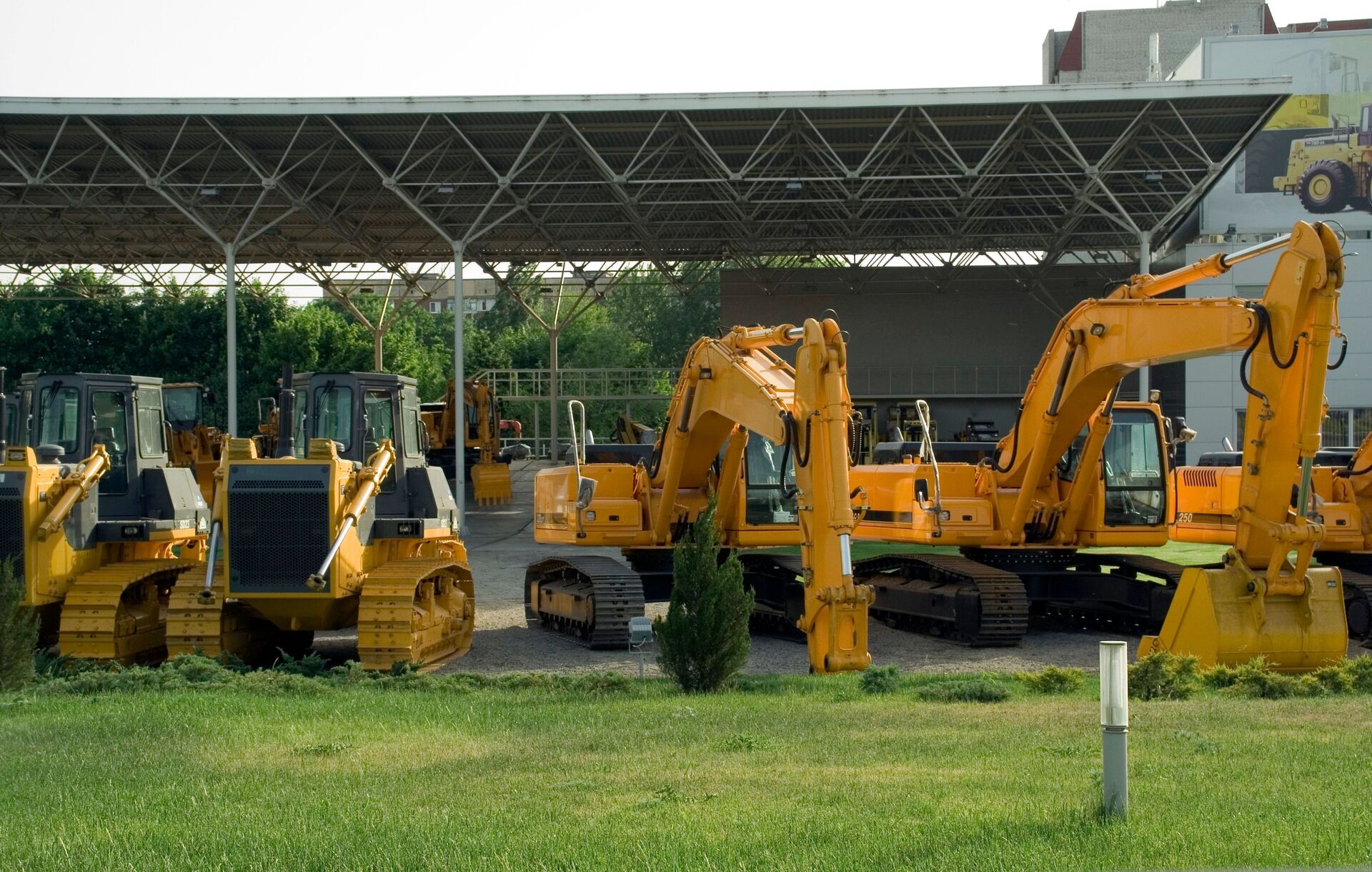
An excavator is not a pistol. It cannot be hidden in a waistband. It has a chassis number stamped into steel, an import record, a customs entry, a dealer, a buyer and, very often, a satellite unit reporting its position to the factory that built it. Ghana has destroyed 234 of them in its forest reserves and is holding more than four thousand at its own ports. It has not named a single financier.
In this report
The least concealable object in crime
Consider what has to happen before an excavator can tear open a forest reserve in the Western North.
Somebody in Ghana places an order. Somebody abroad ships a machine weighing between twenty and forty tonnes. It arrives at a Ghanaian port, where it is declared to customs, assigned a value, assessed for duty, and released to a named consignee. A dealer or an agent handles the sale. A buyer pays for it — a sum in the hundreds of thousands of cedis at minimum, frequently far more, and frequently financed or insured, both of which generate their own documentation. The machine is then loaded onto a lowboy trailer and driven, in daylight, along Ghanaian roads, past Ghanaian police checkpoints, sometimes for hundreds of kilometres. It is offloaded at a site. It works there for weeks or months, consuming diesel that somebody delivers on a schedule, operated by men who are paid, feeding gold to a buyer who pays for it.
At every one of those stages the machine is visible, documented, and attached to a name.
Now consider the identifiers stamped on the thing itself. A chassis or product identification number on a riveted plate. A separate engine number. Serial numbers on the hydraulic pumps and major components. And on many machines built in the last fifteen years, a factory-fitted telematics unit transmitting position and operating hours by satellite to the manufacturer, whether or not the current owner has ever logged into the portal.
This is among the most traceable objects involved in any serious crime committed in Ghana. And it is the one nobody traces.
What the state has counted
The Ministry of Lands and Natural Resources presented its enforcement figures at a policy dialogue with the IMANI Centre for Policy and Education in Accra on 13 August 2026, current to July. They are precise, and their precision is the point.
A ministry that can count 1,724 changfan machines to the single unit is not an institution that lacks the capacity to count. It counts extremely well. The question is what it counts, and what it declines to.
There is one further figure the state has not published at all: convictions. Two hundred and fifty-eight arrests is a real number. How many were charged, how many tried, how many convicted, how many are serving sentences, how many machines were formally forfeited to the Republic by court order? None of that has entered the public domain. To the ministry’s credit, it has said plainly that the challenge is prosecution rather than arrest — which is an accurate diagnosis and an unanswered one.
Why they burn them in the pit
Footage of excavators burning in forest clearings has circulated in Ghana for a decade, and readers who assume it is theatre should hear the operational case first, because it is genuinely strong.
A forty-tonne machine in a remote concession frequently cannot be recovered. There is no road capable of carrying a lowboy to where it sits — often because the only access is the track the operators themselves cut. Recovery costs can approach or exceed the machine’s value. Officers arriving by foot or by pickup have no means of removing it.
And there is a harder reason, which anyone who has followed Ghanaian enforcement will recognise. Seized equipment has a documented tendency to return to service. A machine parked at a district office is a machine that can be released, reassigned, or quietly collected. Destruction on site is the only disposal that cannot be reversed by a telephone call. Officers who choose it are not being reckless; many of them are being realistic about the system they work inside.
The scale of that problem is not speculative. During earlier military operations in the Atiwa districts and along the Birim, most illegal miners had already fled their sites before the troops arrived, having received early warning from informants in the communities. The machines were still there. The men were not. Whatever else that tells us, it tells us the operations leak.
So the burning is defensible. That is exactly why the next question matters so much. Destruction achieves capability denial: one machine, permanently out of service. It does not achieve accountability: nobody identified, nobody charged, nobody deterred beyond the cost of a replacement. Ghana has consistently chosen the first and described it publicly as though it were the second. Those are different objectives and only one of them ends galamsey.
The question that has never been asked
Everything in this article reduces to one sentence, and it contains no accusation against anybody.
Before each machine is destroyed or immobilised, are its chassis number, engine number and telematics unit photographed and recorded — and where is that register?
Consider the two possible answers.
If the register exists
Then the ownership trail survived every one of those 234 destructions. Each number can be matched against Ghana Revenue Authority import records, dealer sales, finance agreements and manufacturer databases. The route from a burnt machine in the Apamprama reserve to the person who paid for it is a fortnight of administrative work. In which case the public is entitled to ask why, with 234 traceable machines documented, the prosecutions have not followed — and to be told what happened at the step where they stopped.
If the register does not exist
Then the Republic of Ghana has spent years systematically destroying the physical evidence that would identify the financiers of the destruction of its own forests, while simultaneously informing the public that prosecution is the bottleneck. Nobody would need to have intended that outcome for it to be the outcome. It would still be an institutional failure of the first order, and it would still be entirely fixable — a camera, a notebook and a standing instruction, at a cost of essentially nothing.
There is no comfortable third answer. Either the evidence was kept and not used, or it was destroyed. Both are stories. Neither requires anyone to be accused of anything.
Four paper trails that already exist
The following are not investigative fantasies. Each is an ordinary commercial or administrative record that exists in the normal course of business, and in three of the four cases the Ghanaian state is already holding it.
Customs import entry
Held by: Ghana Revenue Authority.
Establishes: importer of record, consignee, declared value, duty paid, date and port of entry for every machine — including all 4,000-plus currently held.
Dealer sales records
Held by: authorised heavy-plant dealers in Ghana.
Establishes: the purchaser. Ghana has a limited number of authorised dealers for the major brands; the distance from import to end user is usually one step.
Manufacturer telematics
Held by: the manufacturer, by satellite.
Establishes: where a specific serial-numbered machine has operated, and for how many hours — independent of anything the owner declares.
Finance and insurance
Held by: banks, leasing companies, insurers.
Establishes: registered legal owner and beneficial interest in machines at this value, which are routinely financed rather than bought outright.
The telematics point deserves emphasis because it is almost entirely absent from Ghanaian coverage. Manufacturers fit these systems to manage warranties, schedule servicing and protect residual values. They function whether or not the machine is being used lawfully. A manufacturer can frequently state where a given serial number has been working. Coverage varies by brand and by age of machine, so it is not a universal key — but asking a manufacturer whether it holds such data is not an accusation against anyone. It is a question about a product feature, and it is among the most powerful unopened doors in this entire story.
The four thousand at the ports are the easiest of all, because nothing has to be reconstructed. Those machines have not gone anywhere. Every name is on a manifest sitting in a government office, being handled by government officials today under the new clearance regime. Publishing an anonymised analysis — how many importers, how concentrated, how many are first-time importers of heavy plant, how many declared end-uses match a licence on the Minerals Commission register — would breach nobody’s privacy and would tell Ghanaians in one page whether this is a broad trade or a narrow one.
The arithmetic of a deterrent that isn’t one
Ghana is Africa’s largest gold producer, and gold has become the dominant line in its export receipts. Illegal mining sits inside that success rather than beside it. Against that revenue, consider what the current enforcement model actually costs an operator.
A destroyed excavator costs the financier one excavator. The men arrested at the pit are, overwhelmingly, the men holding the hose — operators and labourers, not the people who bought the machine. The site is abandoned and resumed. The Frimpong-Manso Institute calls this the raid-return cycle: enforcement arrives, the operation scatters, enforcement leaves, and the operation returns, frequently better organised than before, sustained by bribery and protection networks and by functioning markets for illicit machinery, fuel and gold.
Now set the 4,000-plus machines at the ports against that. Whatever else it demonstrates, it demonstrates that resupply is not a constraint. A model in which the state destroys 234 machines while several thousand more queue at the docks is not a deterrent. It is an operating cost, and a modest one.
A University of Ghana professor, asked why illegal mining resists control, has put it publicly: the practice serves the interests of various power holders in society, including the political class, traditional elites and some bureaucrats, and governments upon governments have struggled with it for that reason. That is an assessment of a national phenomenon, not an allegation against any identified person. But it explains the shape of the record — announcements without outcomes, arrests without convictions, seizures without owners — better than any explanation involving a shortage of resources.
What to demand, and from whom
These are answerable within a week by institutions that already hold the answers. None requires a commission of inquiry. None requires anyone to be accused.
From the Ministry of Lands and Natural Resources
Publish the seized-equipment register: chassis or PIN number, make, model, date and location of seizure, and disposal method, for all 234 excavators. Redact nothing except ongoing investigations, and say how many those are.
From the Attorney-General
Publish the prosecution outcomes for the 258 arrests: charged, tried, convicted, sentenced, acquitted, discontinued. An arrest figure without a conviction figure is a press release. Publishing both converts it into accountability.
From the Ghana Revenue Authority
Publish an aggregate analysis of the 4,000-plus excavators held at the ports: number of distinct importers, concentration among the largest, proportion of first-time importers of heavy plant, and how many declared end-users hold a valid Minerals Commission licence. No individual need be named for that single page to be devastating or reassuring.
From the Forestry Commission
Publish the current satellite verification. The 8,900-hectare figure everyone quotes measures the country as it stood on 31 December 2024. It is nineteen months old, and every hectare taken since is missing from the national record.
From the manufacturers
Confirm whether telematics data exists for machines operating inside gazetted Ghanaian forest reserves, and under what circumstances it would be released to a lawful authority. Three European manufacturers have already refused to accept bauxite from the Atewa Range into their supply chains. The precedent for corporate responsibility in Ghana’s extractive landscape exists.
Ghana has arrested 258 people and cannot say how many were convicted. It has destroyed or immobilised 234 excavators and has not named a single owner. It holds more than four thousand more at its own ports, with every importer’s name on a manifest in a government office. And nine of its forest reserves are now held against the state by armed men its own foresters cannot approach. Every machine has a number. Every number has a buyer. The state is not short of evidence. It is short of the will to read what it already has.
Connected reading
- Ghana is measuring its own ruin with a nineteen-month-old number
- The Pra, the Ankobra and the Offin: what 12,000 NTU actually means at your tap
- Atiwa: the forest reserve that keeps being saved and keeps being mined
- Thirteen people: how Accra drowns on schedule
- Bulldozers with opposite orders: Ghana’s two demolition programmes
Facts verified: 22 August 2026.
Enforcement figures — 234 excavators, 2,728 pumping machines, 1,724 changfan machines, 461 motorbikes and tricycles, 258 arrests, 4,000-plus excavators held at ports, nine reserves inaccessible — as presented by the Ministry of Lands and Natural Resources at the IMANI Centre for Policy and Education dialogue in Accra on 13 August 2026, current to July 2026. Forest reserve hectare figures from the Forestry Commission national satellite verification released 24 February 2026 (data as at 31 December 2024). The “raid-return cycle” characterisation is the Frimpong-Manso Institute’s. The academic assessment of interests sustaining illegal mining is a general observation about the sector and is not an allegation against any identified person. Telematics systems are described generically as manufacturer-fitted equipment whose coverage varies by brand and model year; this publication makes no claim that any specific manufacturer holds or has been asked for data relating to any specific machine. No individual is accused of any offence.