Ghana Is Peaceful. Eleven Children Fell Into Holes Going to the Farm.
Ghana Is Peaceful. Eleven Children Fell Into Holes Going to the Farm.
Below, investigative report by (c) GhanaWeb-News 29nd August 2026
Investigation · Gold, water and the price of quiet
Ghana Is Peaceful. Eleven Children Fell Into Holes on the Way to the Farm.
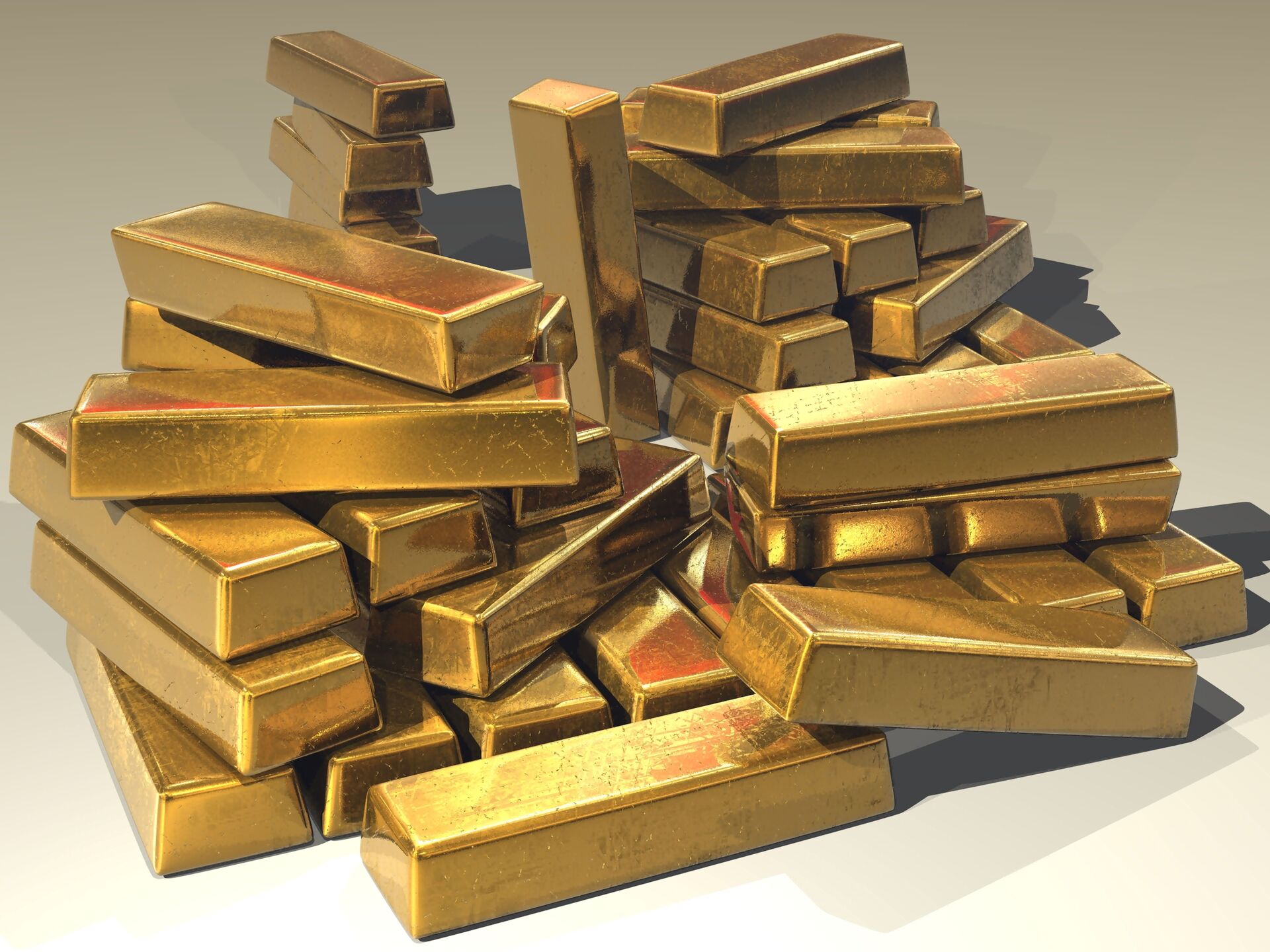
Twenty-three people died in the Ashanti Region walking to their fields, into pits nobody had covered. Four are still underground. In the same period Ghana exported roughly eighty tonnes of small-scale gold for more than eight billion dollars, the cedi rose forty per cent, and reserves reached a record. Between seventy and eighty per cent of the miners producing that gold hold no licence. The state is no longer fighting galamsey. It is banking it.
24 August 2026, Kumasi
The Ashanti Regional Minister, Dr Frank Amoakohene, was speaking at the opening of a newly built Minerals Commission office in Kumasi — a ceremony for the regulator of Ghanaian mining, in the region where mining does the most damage.
He announced that at least twenty-three people had died falling into abandoned illegal mining pits across the region. Eleven of them were children.
Read what he said about how they died, because it is the part that matters. They were on their way to their farms. They fell into pits left uncovered by miners. Only nineteen bodies have been recovered. Four are still down there.
They were not miners. They were not trespassing, not taking a risk, not part of the trade. They were farmers and children walking a path they had walked all their lives, and the path now had holes in it that nobody had filled.
Four families are waiting for bodies that may never be brought up.
This is what Ghana’s peace looks like at ground level: a footpath with unmarked shafts in it, and a regional minister announcing the count at a ribbon-cutting.
And that is only the ones who were not mining
The pit deaths of the past year, from Ghanaian reporting:
Beyond the collapses, research on the sector records that confrontations linked to illegal mining have killed more than fifty security personnel and over a hundred and twenty civilians in recent years, with illegal firearms seized in numbers from mining sites.
Now the money
Here is where the story turns, and where most reporting stops short.
The usual argument is that galamsey robs Ghana — that the gold leaves illegally and the state gets nothing. That was true. It is no longer the whole picture, and the truth is more uncomfortable.
The mechanism is the Ghana Gold Board — GoldBod — established under the Ghana Gold Board Act of 2025. It buys gold from small-scale miners in cedis and exports it for foreign currency, modelled on the cocoa marketing system. It revoked the previous licensing regime and barred foreign nationals from the domestic gold value chain.
It has worked, on its own terms. The policy is credited with the cedi’s appreciation of more than forty per cent, with rebuilding reserves after the 2022 debt default, and with restoring some independence from Eurobond markets. Bank of Ghana gold holdings rose from under nine tonnes in May 2023 to nearly thirty-three tonnes by June 2025.
Ghana’s currency recovery is real. It is also being purchased, in significant part, from a sector where four in five operators hold no licence.
What that actually means
Be precise about the accusation, because precision is the whole point.
Nobody is alleging that GoldBod is a criminal enterprise. Formalising an informal sector is a legitimate policy, practised worldwide, and preferable to leaving the trade entirely to smugglers. Getting gold into the official channel means it is taxed, recorded and paid for in cedis rather than vanishing across a border.
The problem is what happens at the point of purchase.
When the state buys gold from a sector in which most operators are unlicensed, licensed and unlicensed output become indistinguishable the moment they enter the system. There is no assay that reveals whether an ounce came from a permitted concession or from a pit dug into the Offin. Once it is bought, it is simply Ghana’s gold.
Which produces a position no government should want to occupy: the state now has a direct fiscal interest in the volume of small-scale gold production continuing to rise.
The cedi depends on it. The reserves depend on it. The recovery narrative depends on it. And the same activity is destroying the forest reserves, the rivers and the farmland.
That is not a conspiracy. It is an incentive, and incentives do not require anyone to be corrupt in order to work.
The double death
Set the gold beside the other pillar.
Cocoa is Ghana’s historic foreign exchange earner and the livelihood of a very large number of farming families. It requires two things galamsey removes: land, and water.
Mining pits take the land directly. Field reporting from the Ahafo and Bono corridor documented more than sixty acres of productive farmland destroyed in a single area, with excavators working inside forested ground. And the water is poisoned: rivers in the south-western basin now run at between five and twelve thousand turbidity units against a treatment design limit of five hundred, with mercury and cyanide entering the same watercourses that irrigate the cocoa belt.
Ghana is dissolving the industry that grows something in order to expand the one that only removes.
Gold is finite and extractive. Cocoa is renewable and requires the land to remain usable. Trading the second for the first is not an economic strategy; it is a liquidation. And it is the equivalent of burning the furniture to stay warm — you survive the night and have no house in the morning.
The case for the defence, put honestly
1.5 million people work in this sector. That is the President’s own figure, and it is why he has called it a complicated fight. Shutting it down overnight would put more than a million people out of work in a country without the social provision to absorb that. Anyone demanding a total crackdown should say what those families do the following week.
Large-scale gold mining in Ghana is more than ninety per cent foreign-owned — Australian, Canadian, Chinese and American companies. Small-scale miners are overwhelmingly Ghanaian. For the first time in over a century, Ghanaians are producing the majority of Ghana’s gold. That is not nothing, and dismissing it entirely means arguing that the value should go back to foreign shareholders.
Formalisation has reduced smuggling, on the government’s account, and increased recorded exports. Gold that used to leave the country untaxed now passes through an official channel. That is a genuine improvement over the previous arrangement.
And enforcement carries its own body count. Obuasi in January 2025 ended with soldiers shooting small-scale miners, and the two accounts of that day have never been reconciled. Anyone calling for a harder crackdown is calling for more of those mornings.
All of that is true and none of it answers the eleven children.
Peaceful for whom
Ghana’s stability is real and it was built deliberately. Nine consecutive elections. Repeated peaceful transfers of power between the two main parties. A Fourth Republic running since 1993 in a region where that is genuinely uncommon. Ghanaians constructed that after three earlier republics were ended by soldiers, and they are right to be proud of it.
It is also useful to a great many people who do not live here. A stable Ghana means gold that keeps flowing, cocoa contracts that hold, a reliable counterparty for the IMF, and a regional base that needs no garrison. Stability is itself an export.
But stability is measured by whether the government changes hands without gunfire. It is not measured by whether nine forest reserves have passed beyond the reach of the state’s own Forestry Commission, whose officers cannot enter them because of attacks, violence and weapons. It is not measured by whether the rivers can still be treated. It is not measured by whether children can walk to a farm.
Ghana does not have a war. It has an extraction economy operating under the cover that peace provides — which is precisely why nobody outside is in a hurry to look closely.
A country at war gets journalists, monitors and pressure. A country that votes peacefully every four years gets a credit rating.
Four questions with public answers
How much GoldBod gold comes from unlicensed operations?
GoldBod knows what it buys and from whom. The Minerals Commission knows how many licences exist. Publishing the proportion of purchased volume traceable to a valid licence would settle in one figure whether formalisation is working or laundering the problem. It has not been published.
How many of the 258 arrests produced convictions?
The Ministry of Lands and Natural Resources counted 258 arrests, 234 excavators and 1,724 changfan machines to the unit. It has never published a conviction figure. An arrest number without a conviction number is a press release.
Who owns the four thousand excavators at the ports?
More than four thousand excavators are held at Ghana’s ports under a new import clearance regime. Every one has a chassis number, a customs entry and a named importer, and all of that paperwork is currently in government hands. Identifying who funds the destruction of the Pra is a filing exercise, not a manhunt.
Who fills the pits?
Twenty-three people are dead because holes were left open on farm paths. The Ashanti Regional Security Council has announced a reclamation drive, which is right and overdue. The question that follows is who pays for it — and whether reclamation will ever be a condition of purchase, so that GoldBod buys only from operators who have filled in what they dug.
That last one is the practical lever nobody is pulling. The state is now the largest buyer of small-scale gold in Ghana. A buyer that size sets terms. If GoldBod required proof of pit reclamation before purchase, it would do more in a year than every task force of the past decade combined — because it would work through money rather than force, and money is the only thing this sector has ever responded to.
The ceremony
Return to Kumasi, 24 August.
A new Minerals Commission office was opened. A regional minister stood up at the ceremony and reported that twenty-three people had died in holes in the ground, eleven of them children, on their way to their farms — and that four bodies had not been brought up.
Ghana is peaceful. The elections are clean, the transfers are orderly, and the currency is stronger than it has been in years, held up by eighty tonnes of gold from a sector where most operators have no licence.
Peace is not the same thing as safety. And a country can be entirely at peace with itself while burning the house down room by room.
Connected reading
- Ghana is measuring its own ruin with a nineteen-month-old number
- The Pra, the Ankobra and the Offin — what 12,000 NTU means at your tap
- 234 machines destroyed, not one owner named
- Atewa — the forest Ghana keeps saving and never protects
- Thirteen people: how Accra drowns on schedule
- The minerals still leave — Congo, Africa and the new scramble
Facts verified: 29 August 2026.
The Ashanti Region deaths — at least 23 people including 11 children, 19 bodies recovered and four still underground — were disclosed by Ashanti Regional Minister Dr Frank Amoakohene on 24 August 2026 at the commissioning of a Minerals Commission office in Kumasi, as reported by The Herald Ghana, Rainbow Radio and other Ghanaian outlets. Individual pit collapses at Tontokrom (Ahafo), Skuumu (Amansie Central) and Odumase-Santenso (Asante Akyem Central) are as reported by Citi News, GBC, GHnow and YEN. The January 2025 Obuasi incident is reported with both accounts: the Ghana National Association of Small Scale Miners stated nine unarmed people were killed and fourteen injured; the Ghana Armed Forces stated seven illegal miners died in a firefight after breaching the perimeter. Gold export figures are from the Ghana Gold Board and reported in The Chronicle, Bloomberg and Ghanaian media: 81,719 kg of small-scale gold exported between January and mid-October 2025 worth US$8.06 billion, against 63,647 kg in 2024 and 37,454 kg in 2023. The 52.4 per cent share of national output for 2025 is from the Ghana Chamber of Mines annual review. Export, forex and reserve figures cited to Parliament are from the President’s February 2026 State of the Nation address as reported by GBC. The estimate that 70–80 per cent of artisanal miners operate without a licence, and the figures for security personnel and civilian deaths in mining-related confrontations, are from the Africa Center for Strategic Studies. The figure of more than 1.5 million people working in galamsey is the President’s own, given to TIME. Forest reserve, turbidity and enforcement figures are as sourced on our earlier reports linked above. No allegation of unlawful conduct is made against the Ghana Gold Board, any government official or any named individual. This article examines published figures, publicly stated policy and their consequences.