12,000 NTU: What Ghana's Poisoned Rivers Actually Mean at Your Tap
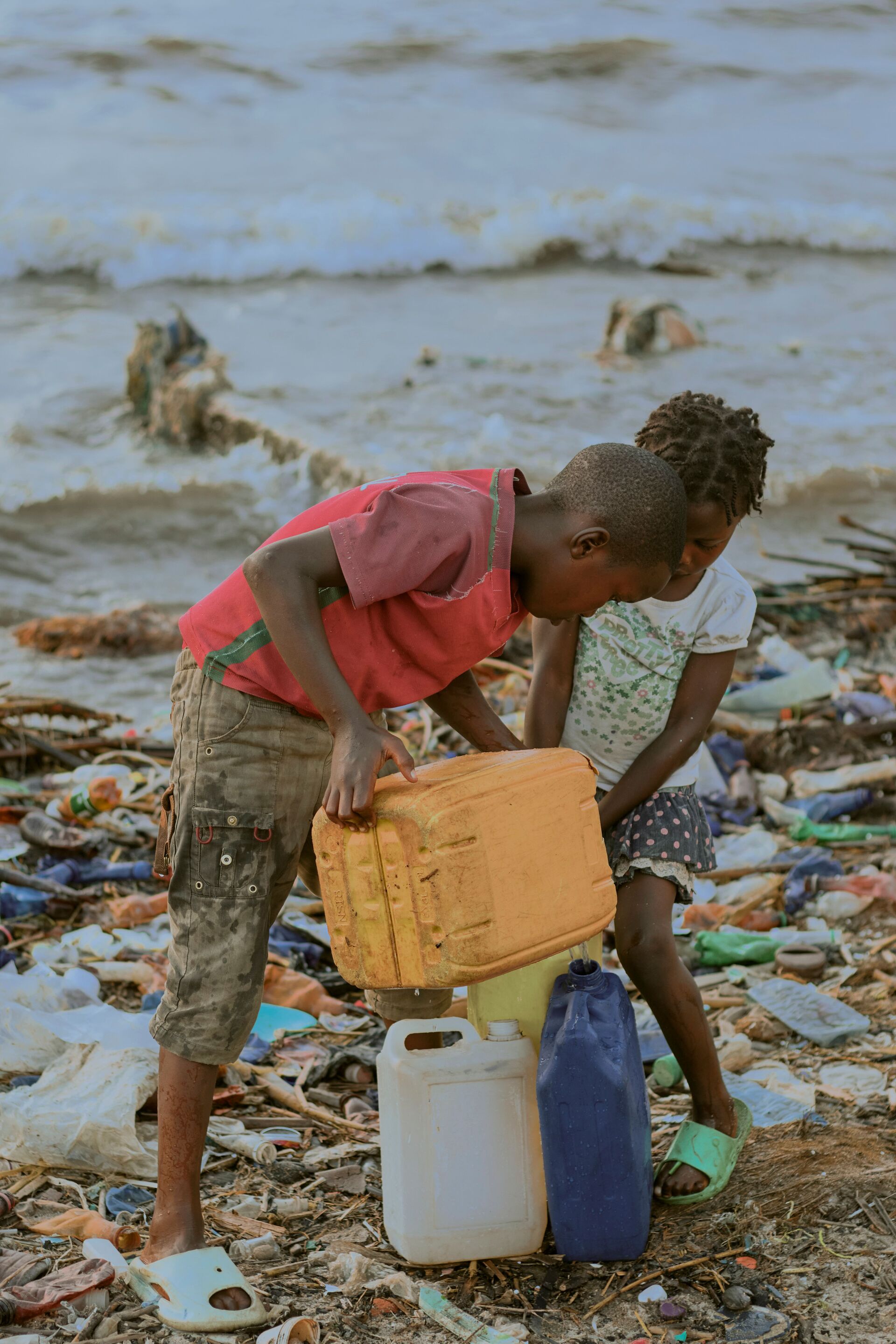
Ghana water crisis! Pra river pollution, Ankobra river, Offin river, Birim river, Oda river, Tano river galamsey, and mercury poisoning Ghana
Below, investigative report by (c) GhanaWeb-News 21st August 2026
Environment · Water
Twelve Thousand NTU: What Ghana’s Poisoned Rivers Actually Mean at Your Tap
Ghana’s treatment plants were built for water carrying up to 500 units of suspended solid. The Pra and the Ankobra now arrive carrying between five and twelve thousand. This is not a story about scenery. It is a story about whether the tap runs, and what it costs when it does.
In this report
What turbidity actually measures
Turbidity is measured in nephelometric turbidity units, and the instrument that reads it does something very simple: it shines a beam of light through a sample of water and measures how much of that light is scattered sideways by the particles suspended in it. Clear water scatters almost nothing. Water full of silt, clay, mud and mineral fines scatters a great deal. The number that comes out is a direct index of how much solid material a river is carrying that does not belong in it.
Ghana Water Company’s operational figure for raw water entering treatment is that it should not exceed 500 NTU. That is not a comfort threshold or an aspiration. It is the design envelope of the physical plant — the sedimentation basins, the dosing regimes, the filters, the backwash cycles. A treatment works is a machine calibrated to remove a certain load. Feed it more than the machine was built to take and it does not produce slightly worse water. It stops producing water.
The current readings on the rivers of the south-western basin run between 5,000 and 12,000 NTU. The Ghana Water Company has recorded turbidity as high as 14,000, against a working figure of 2,000 for adequate treatment.
Twenty-four times the design limit. Not a bad day. The normal condition of a river that supplies millions of people.
Put a glass of 12,000 NTU water on a table and you cannot see through a centimetre of it. It is not water with mud in it. It is mud with water in it. And the material producing that reading is not seasonal silt washed down by rain — rains have come and gone in Ghana for as long as the rivers have existed and the plants coped. It is spoil. It is the ground itself, excavated, sluiced, and returned to the watercourse as slurry by an industry that operates outside every law written to prevent exactly this.
Three basins, one catastrophe
Ghana’s surface water is organised into three basin systems: the Volta, the South-Western, and the Coastal. The South-Western is the one in collapse, and it is no coincidence that it is also the one lying over the gold.
South-Western basin
Rivers: Ankobra; the Pra, comprising the Offin, Birim and Oda; the Tano and Bia.
Condition: Most severely impacted. Turbidity between 5,000 and 12,000 NTU. Treatment plants shut down at Tarkwa.
Volta basin
Rivers: The Volta and its tributaries, including the Oti.
Condition: Contamination documented on the Oti and elsewhere; pressure increasing as mining spreads north and west.
Coastal basin
Rivers: The Densu, the Odaw and the lagoon systems.
Condition: Degraded primarily by urban encroachment, waste and wetland loss rather than mining spoil.
The Pra is the artery of the whole system. It gathers the Offin, the Birim and the Oda and carries them to the sea past Shama, and every kilometre of that journey now runs the colour of laterite. The Offin drains the Ashanti goldfields. The Birim drains Atiwa and the Eastern diamond and gold country. The Oda gives its name to a forest reserve that has lost 2,654.8 hectares — the single worst-hit reserve in Ghana. When a forest reserve is stripped, the reserve does not simply vanish; it is dissolved and carried downstream. Those hectares are in the water.
What makes this a national rather than a regional emergency is that the frontier is still advancing. In the Ahafo and Bono corridor, the River Bisi flows into the Subri and then into the Tano — and the Tano is raw water for Ghana Water Company treatment supplying parts of the Bono Region including Sunyani. A visit to the affected communities of Adegyemim, Bisi, Krofofrom, Subriso, Mankranho, Kootwi, Tanom and Tanoso found forest and farmland stripped, deep pits, heavy excavators working inside forested ground, and more than sixty acres of productive farmland already destroyed.
It also found something that no turbidity meter registers. Residents would not speak on the record, citing threats and intimidation from the operators. A river can be measured. A community that has been silenced cannot.
The day a treatment plant gives up
Most Ghanaians have never seen the inside of a water treatment works, so it is worth describing what actually happens when the raw water goes bad, because the failure is not dramatic. It is administrative.
First, the chemistry stops working
Conventional treatment begins by adding a coagulant, which makes suspended particles clump together so they can settle out. The dose is calculated against the expected load. Triple the load and you triple the chemical. Multiply it by twenty-four and the dosing equipment is no longer operating within its range at all, the pH swings, and the coagulation either fails or produces so much sludge that the basins fill faster than they can be cleared.
Then, the filters blind
Sand filters clog. Backwashing them uses treated water — the very product the plant exists to make. As raw turbidity climbs, the proportion of output consumed by backwashing rises until the plant is running hard and delivering little. Output per shift collapses while every input cost rises.
Then, the plant is switched off
This is not hypothetical. Ghana Water has shut down treatment plants at Tarkwa because the water arriving was beyond treating. A shutdown is the honest end point of the arithmetic: at some level of contamination, the correct engineering decision is to stop, because continuing would mean pumping unsafe water into a public supply.
The bill arrives twice. Every additional unit of turbidity is paid for once in chemicals, electricity, sludge handling and lost production, and again by households when tariffs rise to cover it. Ghanaians in mining-affected districts therefore pay a premium for their own water precisely because their own river has been destroyed — and the people who destroyed it pay nothing towards the treatment of what they poured in. That is not a market failure. It is a transfer.
The part that ends up in people
Turbidity is the visible half of the problem and by some distance the less dangerous half. Silt can be settled out. Mercury cannot.
Small-scale gold recovery uses mercury to amalgamate fine gold, and cyanide is used in some operations for leaching. Both enter the watercourse. Mercury does not degrade. It converts in aquatic sediment to methylmercury and accumulates upward through the food chain, so the fish concentrate what the river carries and the people concentrate what the fish carried. About sixty per cent of Ghana’s water resources are now understood to be polluted, largely by these substances.
Ghanaian health authorities and researchers have set out the consequences repeatedly and in plain language. Mercury exposure is associated with brain damage, kidney disease and birth defects. Children are the most vulnerable, because their bodies and brains are still developing — the documented outcomes include stunted growth and cognitive impairment. Pregnant women face raised risk of miscarriage, stillbirth and congenital defect. Inhalation of dust and fumes around mining sites has driven a rise in respiratory illness including asthma. Research in mining communities links water pollution to chronic disease including kidney failure and cancer.
There is a particular cruelty in the geography here. The communities living closest to the extraction are the ones drinking the most concentrated water, eating the most contaminated fish, breathing the most dust, and holding the least power to stop any of it. A visiting team to a site in the Banda district of the Bono Region found children living at the workings in tents, with no school anywhere in the area. The site had a store, generators and solar panels. What it did not have was a classroom.
The operation could power itself off-grid in the middle of a forest. It could not manage a school.
A nation of rivers, importing water
Experts have put a date on the trajectory: on current trends, Ghana could be importing drinking water by 2030. It is worth sitting with how absurd that sentence is. This is a country whose southern third is laced with permanent rivers, whose rainfall is measured in metres, which built one of Africa’s largest artificial lakes, and which is now credibly discussed as a future water importer — not because the water stopped falling, but because what falls is being deliberately ruined on its way to the sea.
The people who live along these rivers understood the arithmetic long before it reached a conference agenda. In Berekum, residents and traditional leaders have marched twice this year over the Amoma River and the farmlands going with it, in April and again in August. Their placards did the analysis: that Berekum is not ready to import drinking water, that they will not mortgage the future for a greedy few. They asked for enforcement rather than statements, for prosecutions rather than press conferences, for water bodies and farmlands and forest reserves to be treated as non-negotiable.
They are, in effect, asking the state to do the thing the state has said for a decade that it is doing.
What would actually have to change
Nothing in this article requires new science, new technology or foreign expertise. Every element of the solution is known, and most of it is already law. What is missing is the willingness to apply it to people who can afford lawyers.
Publish river data continuously, not occasionally
Ghana Water measures raw turbidity at every intake, every day, because it must in order to run the plants. Those readings exist. Publishing them as an open daily series — by intake, by river, by date — would convert an internal operational log into a public accountability instrument overnight, at essentially zero cost. A rising line at a named intake identifies an active site upstream within days. Nobody is publishing it.
Treat the intake as the enforcement trigger
When turbidity at a given intake exceeds the treatable threshold, that is prima facie evidence of illegal activity in a defined catchment upstream. It should automatically compel an investigation with a named responsible officer and a published outcome. At present a plant shutdown produces a public apology about supply interruption and nothing else.
Make the polluter carry the treatment cost
Every cedi of additional coagulant, electricity and sludge handling caused by mining spoil is currently paid by customers. Recovering those costs from convicted operators and from the owners of seized equipment would turn an externality into a liability. It would also, for the first time, give Ghana Water a direct financial interest in prosecutions succeeding.
Follow the machine, not the man at the pit
The people arrested at galamsey sites are overwhelmingly the people holding the hose. The excavator has a chassis number, an import record, a customs entry and an owner. Ghana is currently holding more than four thousand excavators at its own ports under a new clearance regime, with all of that paperwork in its own hands. Identifying who funds the destruction of the Pra is a filing exercise, not a manhunt.
A river is the most honest instrument a country possesses. It cannot be briefed, it does not attend policy dialogues, and it publishes its own results every single day at every intake between the goldfields and the sea. Ghana’s rivers have been filing the same report for years, in numbers that any technician can read, and the report says that the machinery of the state is either unable or unwilling to stop what is being done to them. Until the tap runs clear, no statement issued in Accra is worth the paper — because the water is the audit.
Connected reading
Facts verified: 22 August 2026.
Turbidity thresholds and south-western basin readings from the parliamentary record on the state of Ghana’s forest reserves and water bodies, and from Ghana Water Company figures reported by the Institute for Security Studies. Forest reserve hectare figures from the Forestry Commission national satellite verification released 24 February 2026 (data as at 31 December 2024). Health outcomes as set out by Ghanaian health authorities and reported by the Ghana News Agency. Bisi–Subri–Tano and Banda district field reporting by the Ghana Broadcasting Corporation. Berekum demonstrations April and August 2026. The treatment-process description is a general account of conventional coagulation-and-filtration works and is not specific to any named plant.